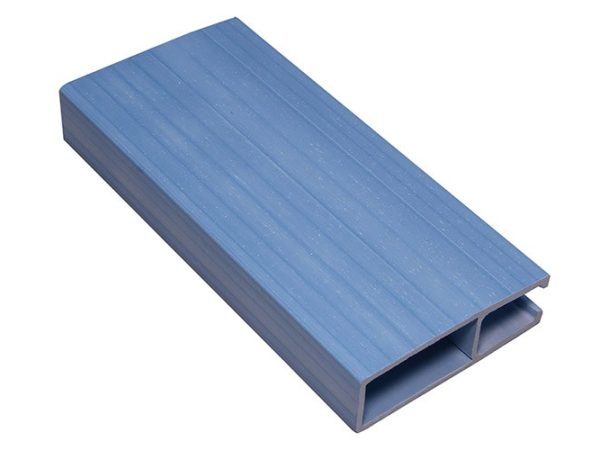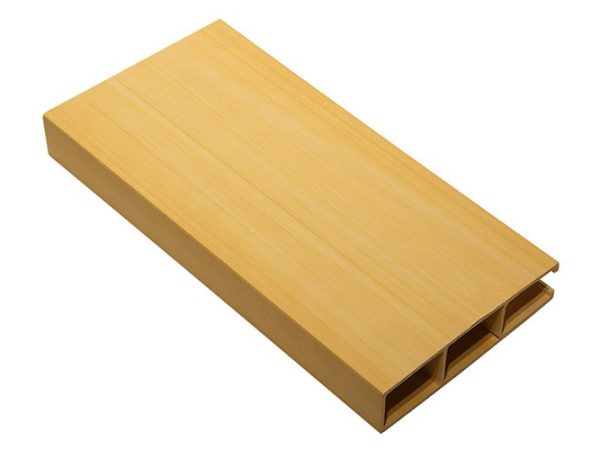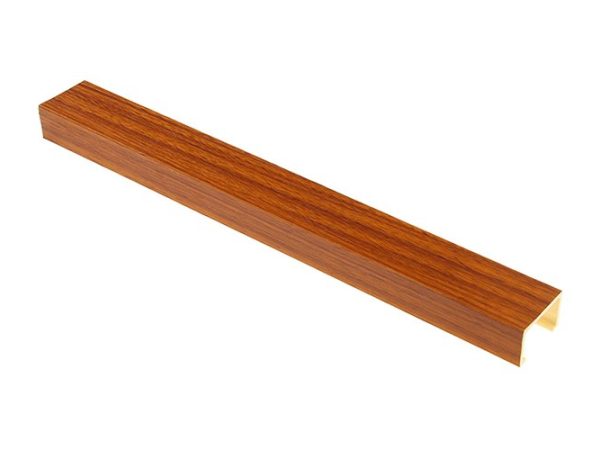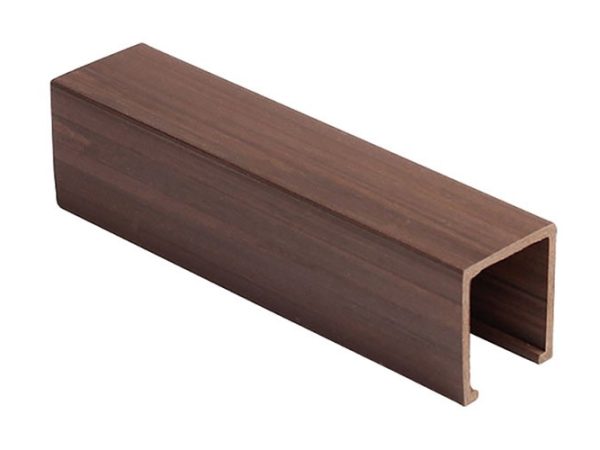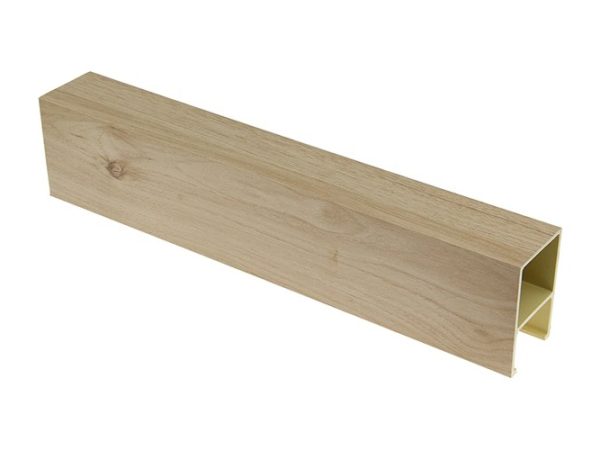
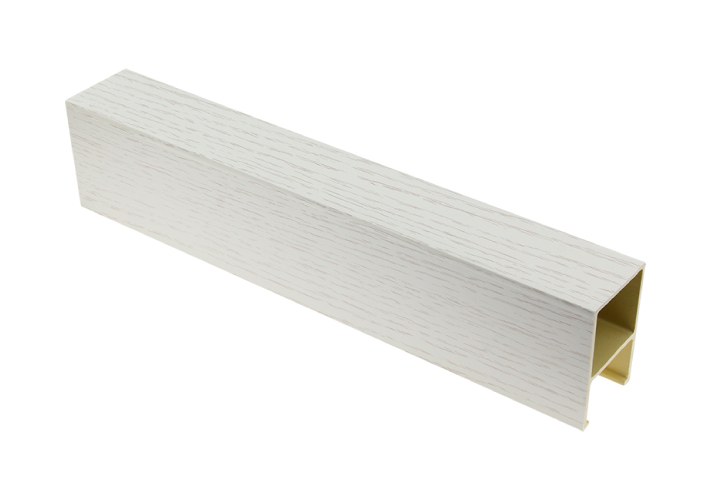
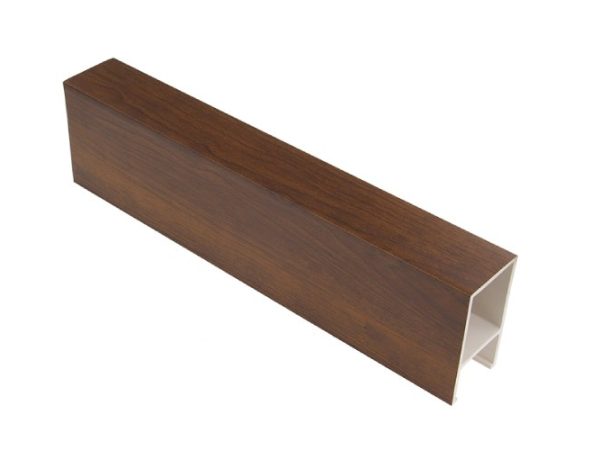
25 × 50 mm section · interior ceiling
WPC Ceiling Tube 25 × 50 mm
- Section 25 × 50 mm, supplied made to order to the run length
- Form Hollow four-face wood-plastic profile, finished on all sides, so it reads as a beam

50 × 75 mm section · interior ceiling
| Section | 50 × 75 mm, supplied made to order to the run length |
|---|---|
| Suspension | Suspended detail — hangs on hangers below the slab rather than fixing tight to it |
| Void | Creates a service void between the tube line and the structure; the depth is set by the hanger |
| Load path | A hanging tube carries load into the hanger, so set hangers out and fix back to structure |
| Use | Ceilings where the beam line sits below services, or a suspended rhythm is the design |
| Standard | SGS tested. CE documentation supplied with EU-bound orders. |
| Maintenance | Wipe clean. No paint or oil finish required. |
Hangs on hangers below the slab instead of fixing tight to it
A void between the beam line and the structure, sized by the hanger
A hanging tube carries load into the hanger, so it fixes back to structure
Tubes below, panels above, with the void between used for services
A hollow wood-plastic ceiling tube at 50 × 75 mm with a suspended detail. Rather than being fixed tight to the slab, it hangs on hangers, which leaves a void between the beam line and the structure above.
That void is the reason for the product. It is where services run — conduit, duct, small pipe — and it is also what lets the ceiling dry. The depth of the void is set by the hanger rather than by the tube, so the section fixes the visual weight and the design fixes the service zone; those two decisions need to be made together, because a hanger length chosen after the services are set out usually turns out to be wrong. A suspended tube also carries its load into the hanger instead of into the substrate, so the hangers have to be set out along the run and fixed back to structure. The profile is finished on all four faces and is commonly combined with a flat ceiling panel above it, with the tubes forming the visible rhythm and the void between serving the building.
Confirm the service zone depth and the hanger positions before ordering, and tell us if the tubes are being combined with panels so the two can be set out as one assembly.
The trays run in the void and stay reachable above the beam line
Services sit between the beam line and the slab, hidden but reachable
A suspended rhythm that also carries the service zone
The sprinkler run sits in the void while the beam line stays clean
1 × 20ft container, mixed across products where the mix suits the project. A sample box can be arranged before the first container.
Yes. Send the product and the size you are specifying, and we will confirm the sample and the lead time for it.
The tube hangs on hangers below the slab instead of being fixed tight to it, which leaves a void between the beam line and the structure. That void is where services run and where the ceiling can dry.
That is set by the hanger, not by the tube. The tube section is 50 × 75 mm and the drop below the slab is whatever the hanger length is, so the design controls it. Confirm the service zone depth before ordering.
Yes. A hanging tube carries load into the hanger rather than into the substrate directly, so hangers have to be set out along the run and fixed back to structure.
Yes, and that is a common assembly: tubes below, panels above, with the void between them used for services. The two have to be set out together.
Final packing, freight and loading plan are confirmed in writing on the order quotation.
25 × 50 mm section · interior ceiling
25 × 80 mm section · interior ceiling
25 × 100 mm section · interior ceiling
40 × 25 mm section · interior ceiling
40 × 45 mm section · interior ceiling
50 × 60 mm section · interior ceiling
Tell us the size, the quantity and the destination port. We will come back with price, lead time and the packing plan.
The product name and SKU are filled in for you.
Send drawings or specs — we reply in one business day