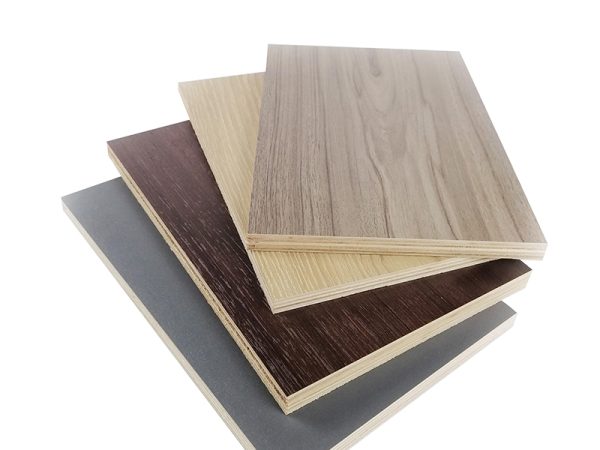
Film faced plywood
The form face. The phenolic film sheds water and cement paste, so the sheet lifts without the concrete bonding to it.
Learn more Film faced plywood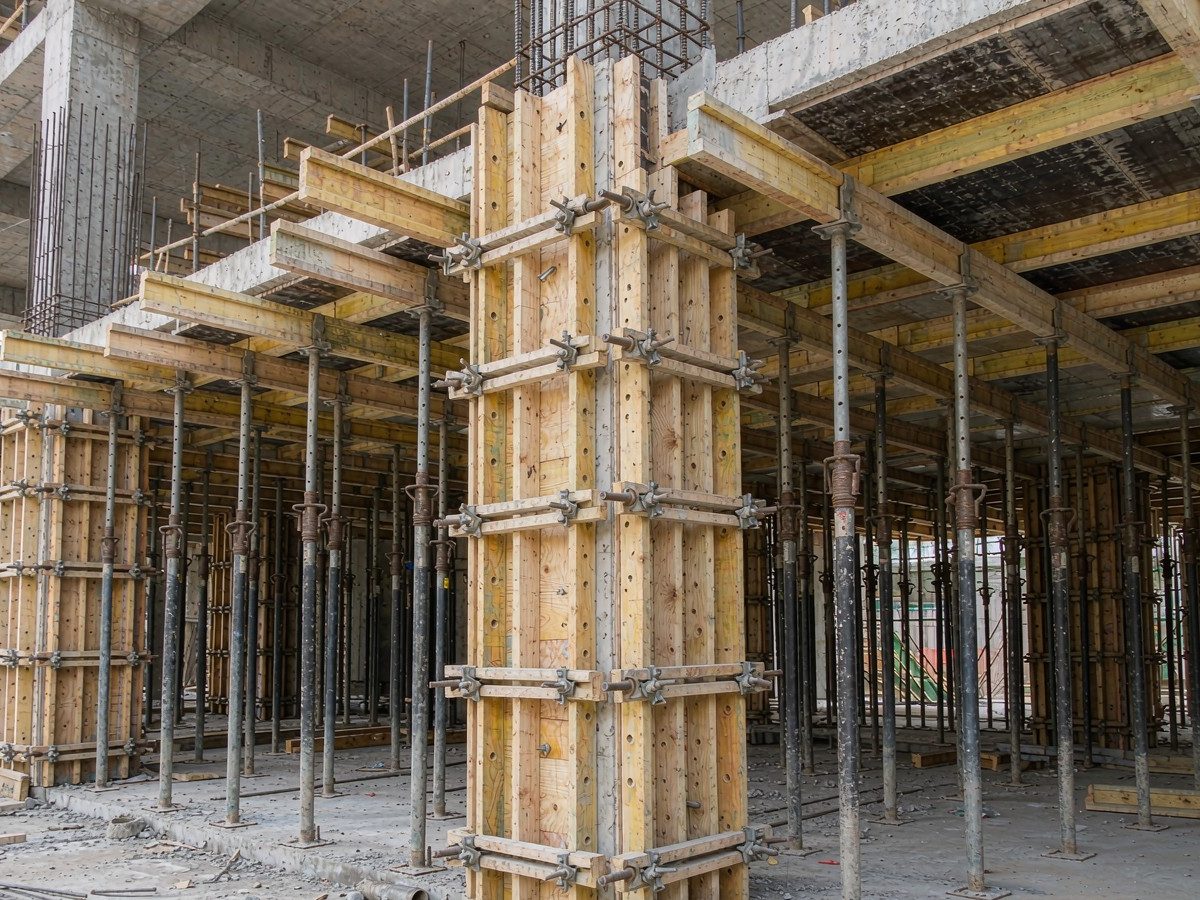
What goes into this job
The form face. The phenolic film sheds water and cement paste, so the sheet lifts without the concrete bonding to it.
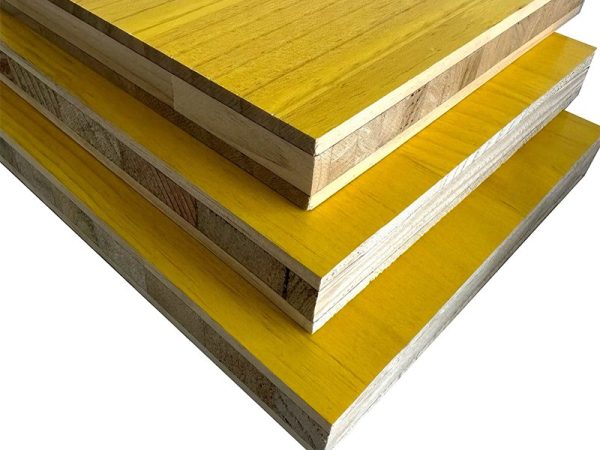
Learn more Film faced plywoodThree-ply yellow shuttering is the general-purpose form face where the budget governs. It takes fewer turns than MDO.
Learn more Shuttering plywoodThe formwork beam. Section is what governs strength — confirm the real section with the supplier before ordering.
Learn more H20 timber beamSheathing and non-critical form faces. Check the grade suits both the load and the exposure.
Learn more OSBHow the job runs
Beam section, not just beam length. Under-sized beams are what cause a form to fail.
Mixed thicknesses in one pour put different deflection under the same concrete. Sort before use.
New plywood swells on first use. Wetting cuts the suction that dries the face too fast.
Release agent only after the first set. Cement paste on a bare film will still bond.
Concrete left to cure on the sheet is exactly what reduces the reuse count next week.
Retire damaged and edge-broken sheets. One failed sheet in the next pour is a failure event.
Specified on this kind of job
Black, brown and HDPE film · 18 mm · 1220 × 2440 mm
Standard or poplar core · 21–27 mm · 500 / 1000 mm wide
Technical notes
Formwork is bought on cost per pour, not cost per panel. A film faced panel that survives more turns costs less than a cheaper panel replaced twice, and the panel face affects the finish left on the concrete.
Send the pour size and the number of lifts and we will work out the panel, beam and release-agent load together.
Area, substrate, fire rating and target cost are enough for a first answer.
Send drawings or specs — we reply in one business day