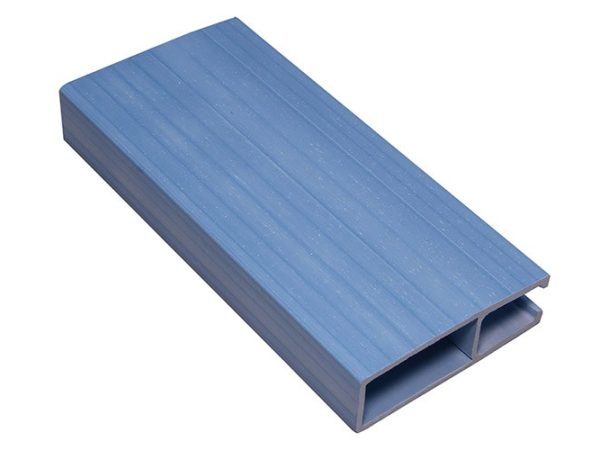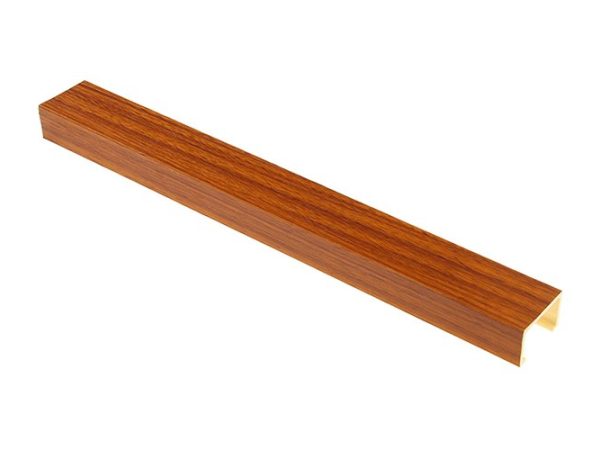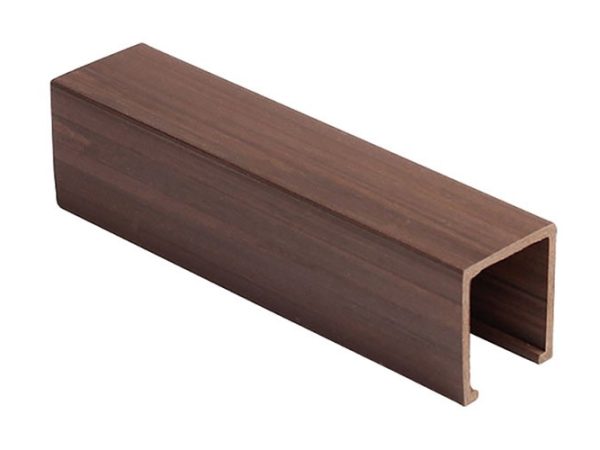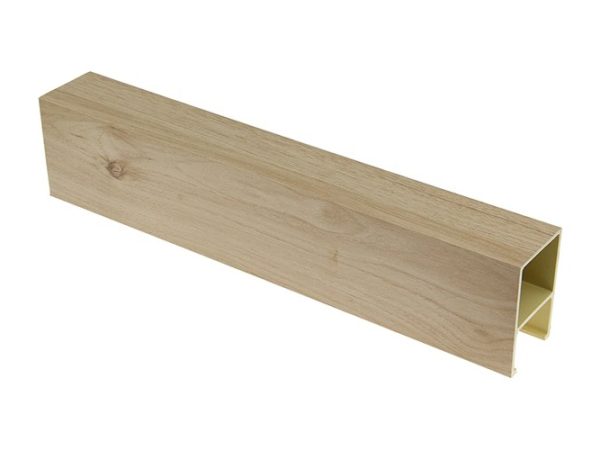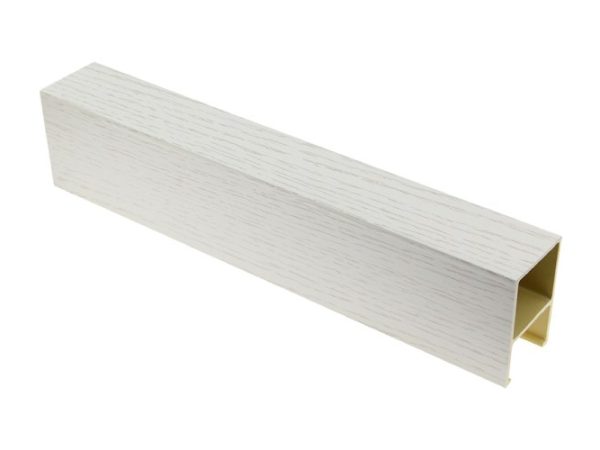
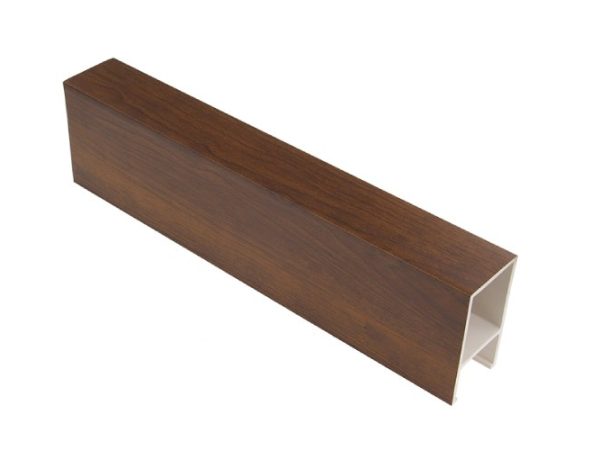
25 × 50 mm section · interior ceiling
WPC Ceiling Tube 25 × 50 mm
- Section 25 × 50 mm, supplied made to order to the run length
- Form Hollow four-face wood-plastic profile, finished on all sides, so it reads as a beam

25 × 100 mm section · interior ceiling
| Section | 25 × 100 mm, supplied made to order to the run length |
|---|---|
| Visual weight | Wide face at shallow depth — a broad beam line without dropping the ceiling much |
| Deflection | Depth governs stiffness, so a wide shallow tube deflects more over the same span |
| Suspension | Batten or direct fix; on a wide face, a wave in the hanger line shows in the ceiling |
| Use | Broad low-profile beams, and tubes grouped into a coffer grid |
| Standard | SGS tested. CE documentation supplied with EU-bound orders. |
| Maintenance | Wipe clean. No paint or oil finish required. |
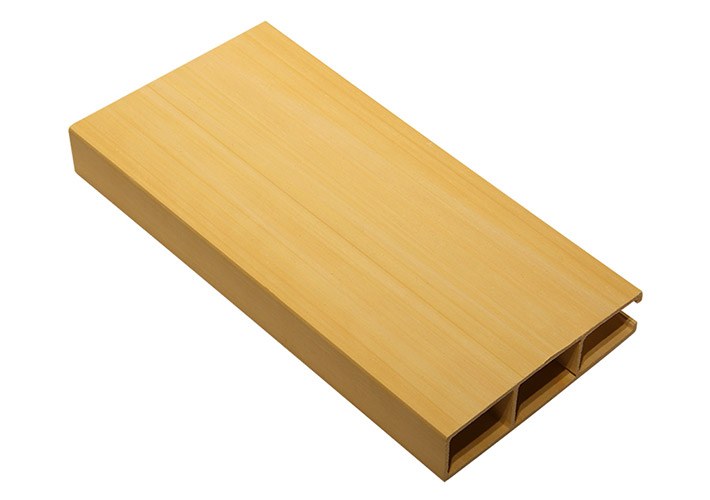
25 × 100 mm gives a broad beam line for very little ceiling depth
Reads as a flat beam rather than a deep timber one
Depth governs stiffness, so a shallow tube needs hangers over a long run
Several tubes at a spacing form a coffer grid without a frame
A hollow wood-plastic ceiling tube at 25 × 100 mm: a wide, shallow face that reads as a broad flat beam from below rather than as a deep timber one. It is finished on all four sides, so the profile works exposed.
Its use is decorative ceiling beams where the ceiling cannot afford much depth. A 50 × 150 tube reads as a heavy beam and drops the ceiling accordingly; a 25 × 100 gives a broad beam line for a fraction of the depth. Which is right depends on the ceiling height available rather than on taste, and it is worth checking the proportion in section before committing. The engineering caveat is deflection: depth governs stiffness far more than width, so a wide shallow tube deflects more over the same span than a deep one. On a long run either add hangers or step up to a deeper section. The section is also commonly grouped to form a coffer grid without a separate frame, provided the hangers land on the grid lines — and because the face is wide and unbroken, any wave in the hanger line will show in the finished ceiling.
Send the ceiling height and the run length when you enquire so the section can be checked against the span rather than chosen on appearance alone.
A beam line that does not cut the ceiling height
A broad grid overhead that gives the room a coffered feel
A wide flat beam over the bed without dropping the soffit
A repeating beam line at a scale that suits a large shop floor
1 × 20ft container, mixed across products where the mix suits the project. A sample box can be arranged before the first container.
Yes. Send the product and the size you are specifying, and we will confirm the sample and the lead time for it.
Because it gives a broad beam line without dropping the ceiling much. A 50 × 150 tube reads as a heavy timber beam; a 25 × 100 reads as a wide flat batten. Which one is right depends on the ceiling height you have, not on preference.
It deflects more than a deep section over the same span, because depth governs stiffness far more than width does. If the run is long, either add hangers or step up to a deeper section. Send us the span and we will say which.
Yes, that is a common use: several tubes set out at a spacing create a coffer grid without a separate frame, provided the hangers land on the grid lines.
No, the face is unbroken and the fixing is concealed behind the tube. What shows is any error in the hanger line, because a wide face exaggerates a wave in the run.
Final packing, freight and loading plan are confirmed in writing on the order quotation.
25 × 50 mm section · interior ceiling
25 × 80 mm section · interior ceiling
40 × 25 mm section · interior ceiling
40 × 45 mm section · interior ceiling
50 × 60 mm section · interior ceiling
50 × 75 mm section · interior ceiling
Tell us the size, the quantity and the destination port. We will come back with price, lead time and the packing plan.
The product name and SKU are filled in for you.
Send drawings or specs — we reply in one business day