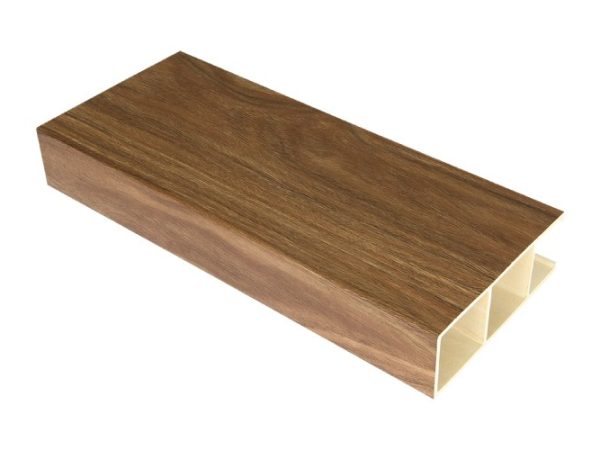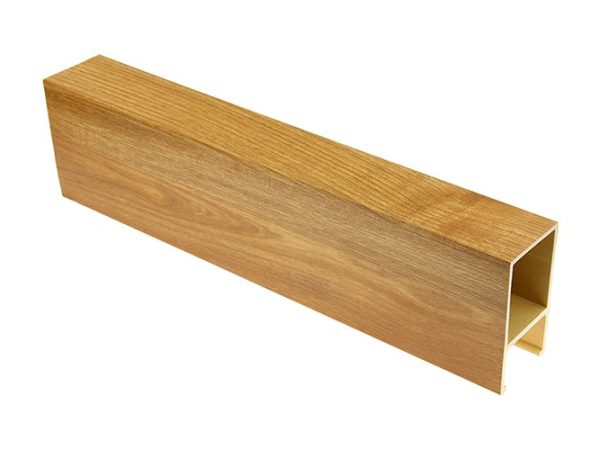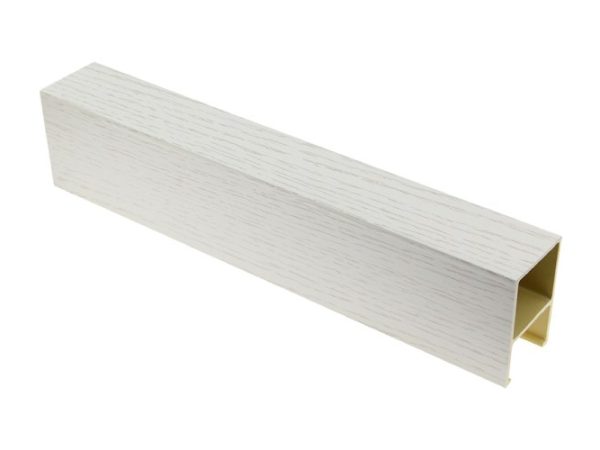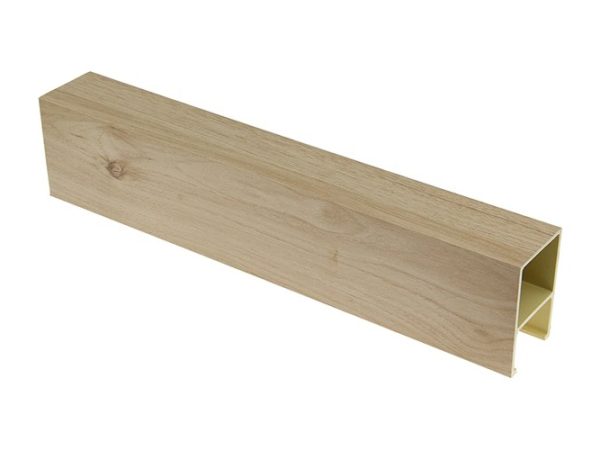
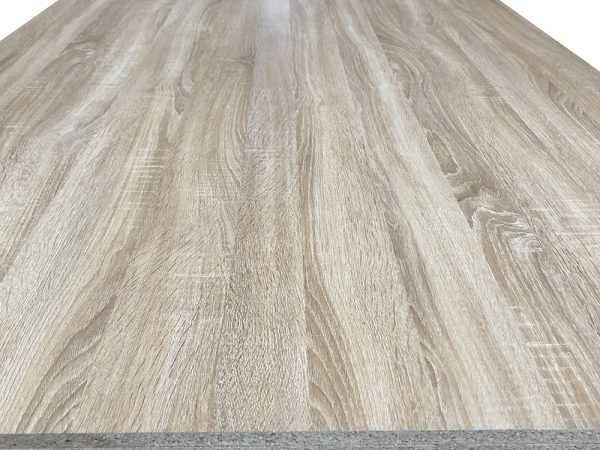
E0 and E1 emission · 1220 × 2440 mm · 9–25 mm
Particle Board
- Size 1220 × 2440 mm, 2100 × 2800 mm, 1250 × 2500 mm, 1830 × 3660 mm, or cut to size
- Thickness 9–30 mm
PAR-8FFCE5
Get a Quote
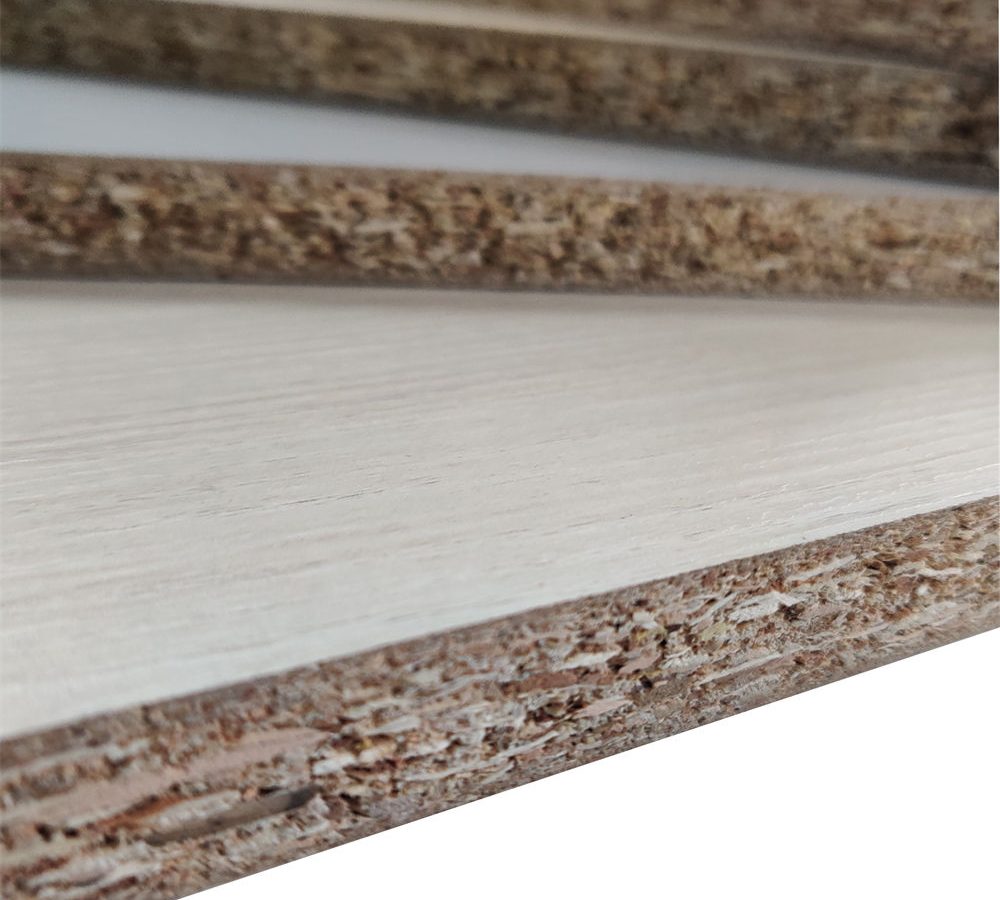
1220x2440mm
| Size | 1220 × 2440 mm, 2100 × 2800 mm, 1250 × 2500 mm, 1830 × 3660 mm, or cut to size |
|---|---|
| Thickness | 9–30 mm |
| Flake | Larger, oriented flakes than standard particle board — the reason it bends further before it fails |
| Strength | Higher bending strength than standard particle board, so it takes a longer shelf span |
| Material | Wood flakes bonded with adhesive under pressure |
| Emission | E0 and E1 grades available; E1 is the standard interior grade, E0 the tighter of the two |
| Edge | Cut edges need an edge band or trim — the exposed core takes up moisture |
| Use | Shelving, loaded carcasses, packaging and areas that need more strength than a standard chipboard |
Larger flakes with a direction, so more overlap along the panel
Carries more bending load than standard particle board
The exposed flake core takes up moisture and reads as unfinished
The denser structure adds weight the fixing has to allow for
Flakeboard, made from larger and oriented wood flakes rather than the random particle mix of standard chipboard. It comes in 1220 × 2440 mm and larger formats from 9 mm to 30 mm, in E0 or E1 emission grades.
The flakes are the difference that matters. Because they are larger and carry a direction, there is more overlap along the panel, and the board carries more bending load before it fails. In practice that converts into a longer unsupported shelf span: a flakeboard shelf sags later than a standard particle board shelf of the same thickness, which is exactly what a shelving or loaded-carcass application needs. It is still an engineered panel made with adhesive, so the same rules apply — the span still depends on the thickness and the load, and that is worth checking rather than assuming, because a shelf that sags in service cannot be fixed after the fact. The exposed edge is the other constant: a cut flake core takes up moisture and reads as unfinished, so every visible edge needs a band or a trim, and the panel is slightly heavier than chipboard at the same thickness, which the fixing has to allow for.
Send the span, the load and the edge detail, and we will confirm the thickness and the emission grade against the application.
A shelf that sags later than standard chipboard at the same thickness
Where the panel carries weight rather than just enclosing it
Long spans that cannot take a mid support
A panel that takes load and knocks in transit
1 × 20ft container, mixed across products where the mix suits the project. A sample box can be arranged before the first container.
Yes. Send the product and the size you are specifying, and we will confirm the sample and the lead time for it.
The flakes are larger and oriented rather than randomly scattered, so there is more overlap along the panel and it carries more bending load. In practice that means a longer unsupported shelf span before it sags.
It gets you further than standard particle board, but the span still depends on the thickness and the load. Tell us the span and the load and we will say what thickness holds it rather than leaving it to guesswork.
Yes. The exposed flake core takes up moisture and looks unfinished, so every visible edge needs a band or a trim.
Slightly, because the flake structure is denser at the same thickness. Plan fixings for the weight on a wall-hung unit.
Final packing, freight and loading plan are confirmed in writing on the order quotation.
E0 and E1 emission · 1220 × 2440 mm · 9–25 mm
50 × 150 mm section · interior ceiling
50 × 90 mm section · interior ceiling
50 × 75 mm section · interior ceiling
50 × 60 mm section · interior ceiling
40 × 45 mm section · interior ceiling
Tell us the size, the quantity and the destination port. We will come back with price, lead time and the packing plan.
The product name and SKU are filled in for you.
Send drawings or specs — we reply in one business day