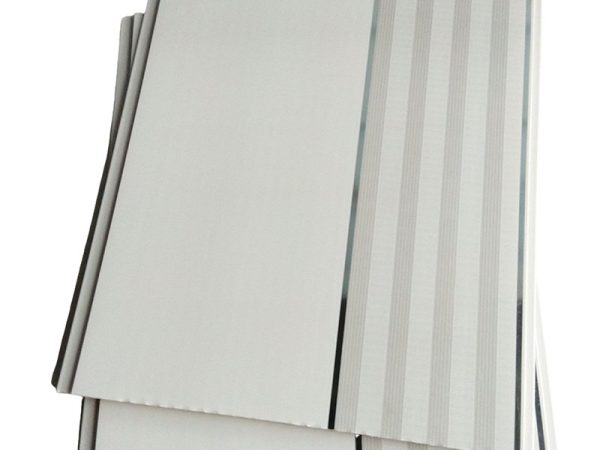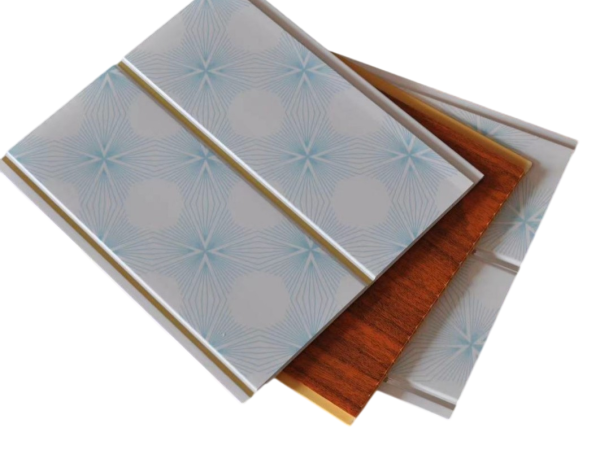
PVC Ceiling Panel
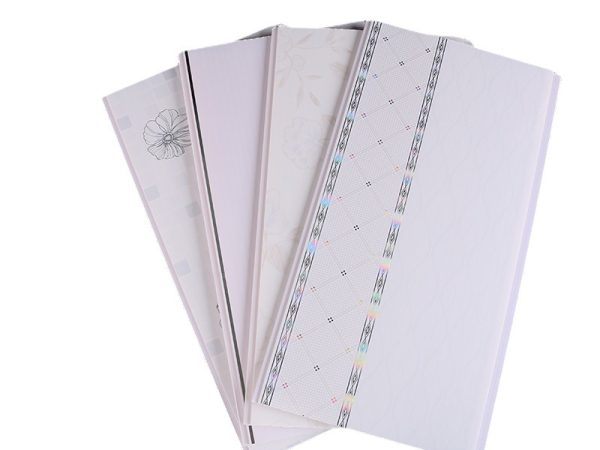
- Face width 120 mm nominal, 9 mm profile
- Edge Tongue-and-groove — panels lock to each other and fix to battens without adhesive
PVC-F1E5D7
Get a Quote
| Profile | Coffered — the section is shaped so the ceiling reads as a panelled plane rather than a flat sheet |
|---|---|
| Face | Recessed panel field with a raised border on each module |
| Edge | Tongue-and-groove between modules, concealed fixing |
| Material | Bamboo-fibre composite — wood fibre bound in a polymer matrix |
| Support | Battens at centres set to the span; the coffer border lands on the batten line |
| Access | Demountable — plan the first module to come down for service access |
| Use | Interior ceilings where a panelled ceiling is wanted without a plaster coffer |
| Standard | SGS tested. CE documentation supplied with EU-bound orders. |
A recessed field with a raised border, so each module reads as a panel
The raised border needs support underneath it or it moves
The battens are set to the module rather than to a round number
A cut module loses its border, so the edge is finished with a trim
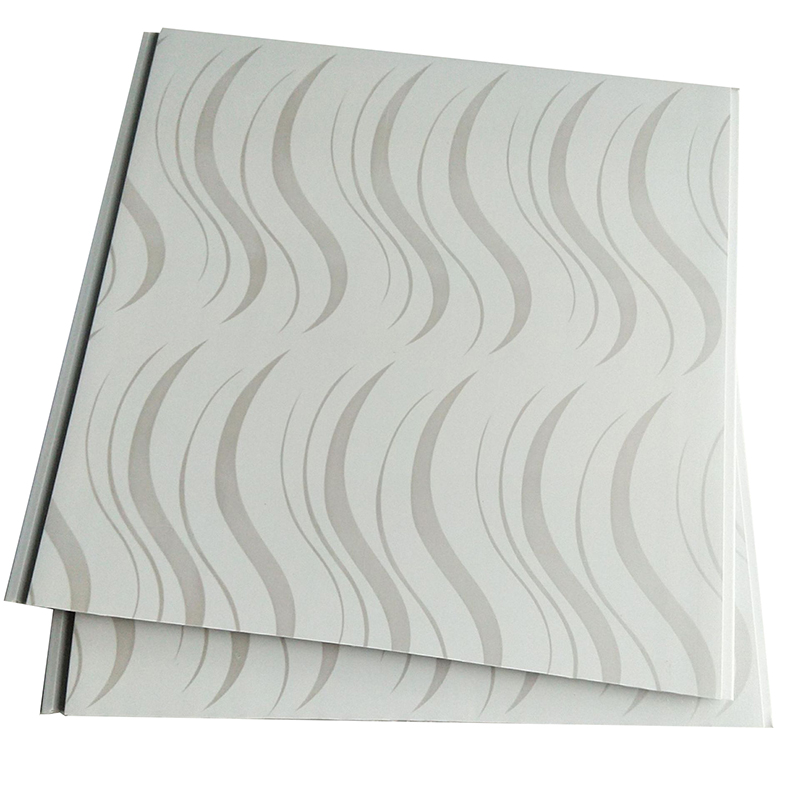
A ceiling panel with a coffered section: a recessed field with a raised border on each module, so the finished ceiling reads as a panelled plane rather than as a flat sheet.
It is the product for a room that needs a ceiling with some articulation without building a plaster coffer — dining rooms, reception areas, hotel rooms, anywhere a plain sheet would look unfinished. The effect is a surface one: the shadow line around each module does the work, and the section is not deep enough to give the volume of a real coffer. That has a consequence for setting out. The raised border has to land on a batten line, or the edge has nothing behind it and it will move, so the battens are set out to the module rather than to a convenient number. Modules can be cut at the perimeter, but a cut module loses its border on that side, which means the edge should be closed with a trim or finish on a full module. Installation is slower than a plain panel for the same reason: an error on a flat ceiling shows as a joint line, while here it shows as a pattern that drifts across the room.
Send the room dimensions so the module set-out and the perimeter detail can be worked out before the order, since both are hard to change on site.
A panelled ceiling that reads as deliberate without a plaster coffer
The room where a ceiling with some articulation earns its keep
A ceiling that has to look finished above a seating group
A ceiling detail that distinguishes the room from the unit next door
1 × 20ft container, mixed across products where the mix suits the project. A sample box can be arranged before the first container.
Yes. Send the product and the size you are specifying, and we will confirm the sample and the lead time for it.
The section has a recessed field and a raised border, so each module reads as a panel with a shadow around it. It is a surface effect rather than a deep coffer — the point is the shadow line, not the volume.
Yes. The border should land on a batten line, otherwise the raised edge has nothing behind it and it will move. Set the battens out to the module, not to a round number.
They can, but a cut module loses its border on that side, so plan the perimeter to be closed with a trim or to finish on a full module. That is the detail that decides whether the ceiling looks deliberate.
Slower, because the module has to land square on the batten grid. On a plain ceiling a slight error shows as a joint line; here it shows as a pattern that drifts.
Final packing, freight and loading plan are confirmed in writing on the order quotation.
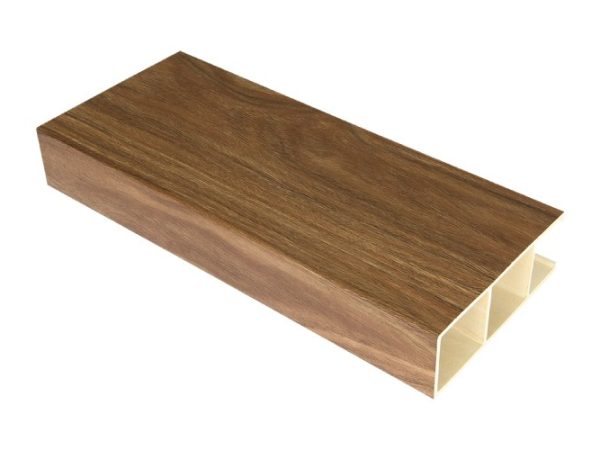
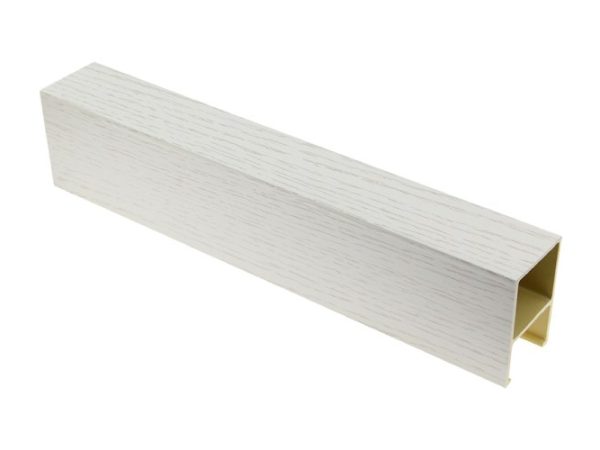
50 × 150 mm section · interior ceiling
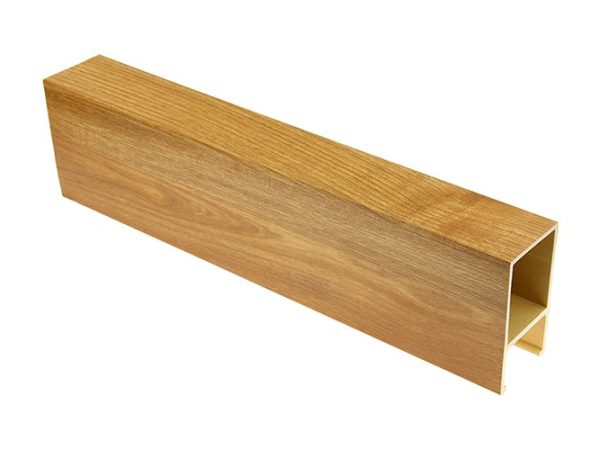
50 × 90 mm section · interior ceiling
50 × 75 mm section · interior ceiling
Tell us the size, the quantity and the destination port. We will come back with price, lead time and the packing plan.
The product name and SKU are filled in for you.
Send drawings or specs — we reply in one business day