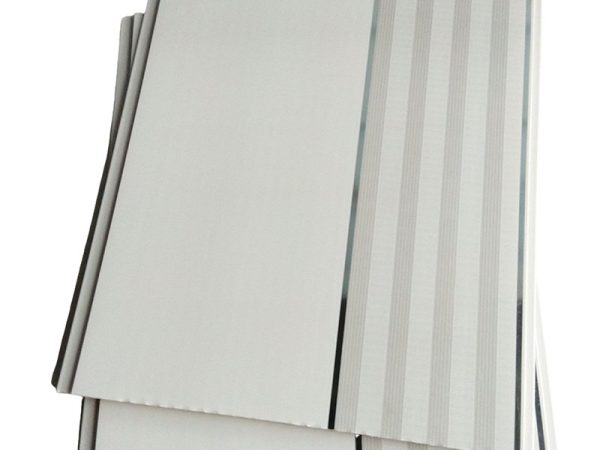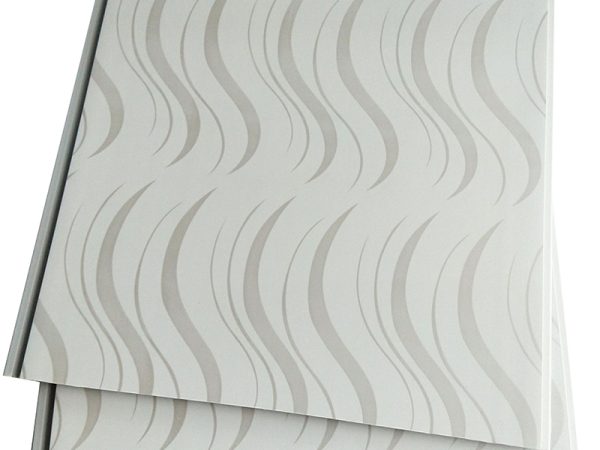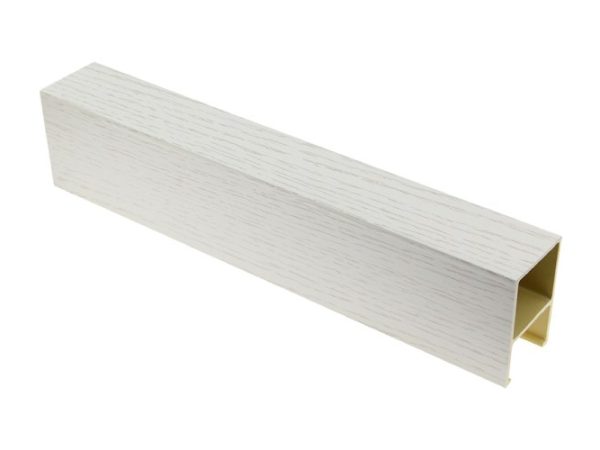
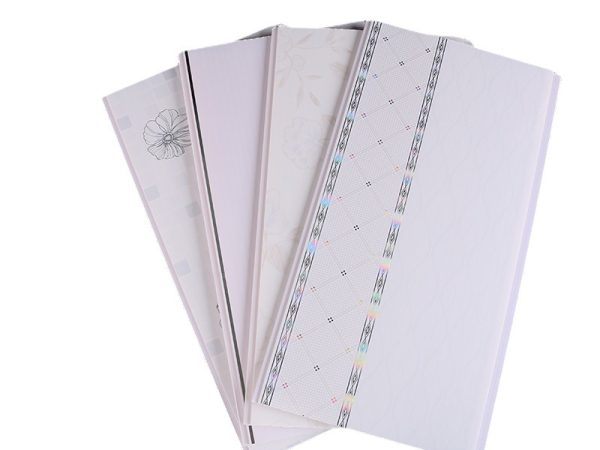
PVC Ceiling Panel
- Face width 120 mm nominal, 9 mm profile
- Edge Tongue-and-groove — panels lock to each other and fix to battens without adhesive
PVC-F1E5D7
Get a Quote
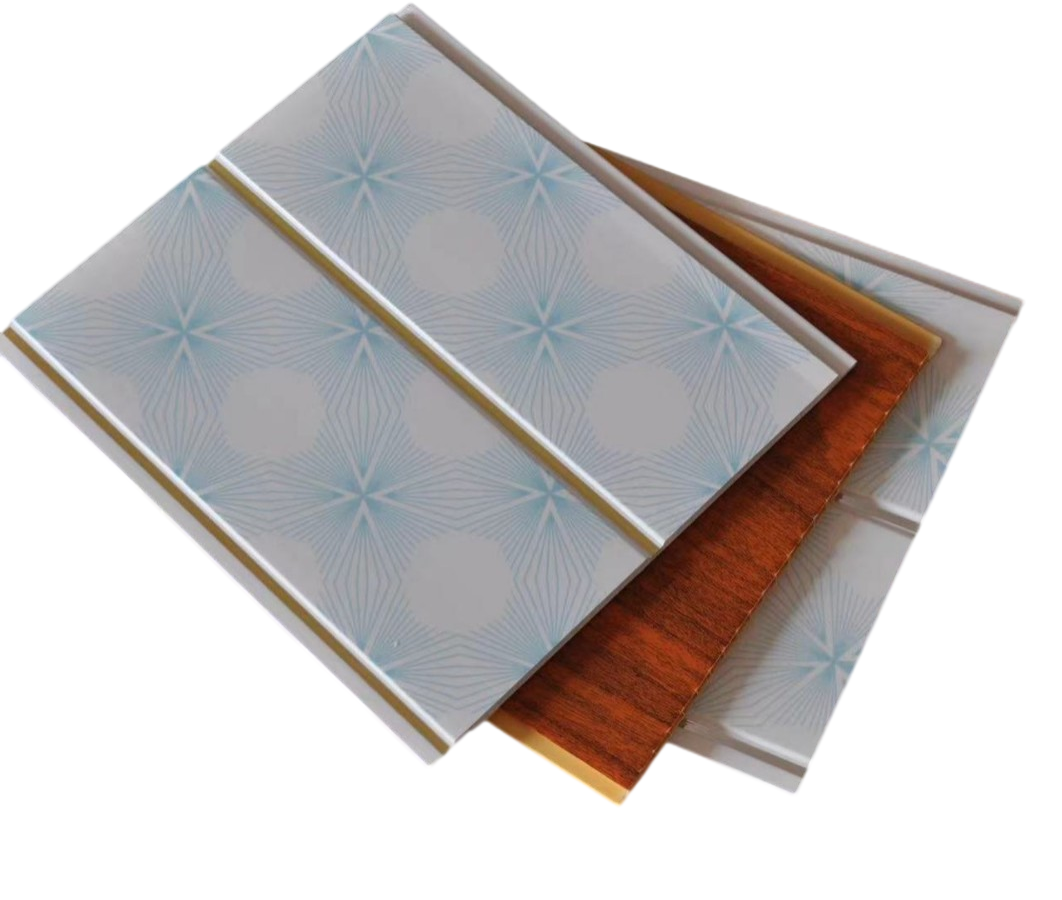
| Face | Perforated — the holes are the absorber path, not a decorative pattern |
|---|---|
| Backing | Absorptive backing behind the perforated face closes the holes against moisture and dirt |
| Limit | Takes the edge off a hard room; it is not a substitute for a panel with a stated NRC |
| Void | Needs a defined cavity behind, because the cavity is part of the absorption |
| Profile | Tongue-and-groove edge, concealed fixing; face width confirmed at quotation |
| Use | Kitchens, corridors and service areas where noise matters and the ceiling stays moisture-proof |
| Standard | SGS tested. CE documentation supplied with EU-bound orders. |
The holes are the absorber path, not a decorative pattern
The backing closes the perforation against moisture and dirt
The void behind is part of the absorption, so it has to be a proper cavity
Takes the edge off a hard room; it is not a panel with a stated NRC
A perforated ceiling panel with an absorptive backing, on a bamboo-fibre composite core. The perforations are functional rather than decorative: sound passes through them and is taken by the backing and the cavity behind.
It is specified for kitchens, corridors and service areas — rooms that are hard and reverberant, where noise is a nuisance, but where the ceiling also has to stay moisture-proof and wipe-clean. In those conditions a conventional acoustic panel is the wrong product and a plain PVC ceiling leaves the reverberation untouched, which is the gap this fills. Being honest about the scale of the effect: it takes the edge off a hard room rather than solving a noise problem, and it is not a substitute for a panel with a stated NRC. If the room has an acoustic requirement, the figure should be checked against what a ceiling panel can reach before it is written into the specification. The backing closes the perforations, so the ceiling remains a moisture-proof surface, and the void behind should be a defined cavity rather than an open, draughty roof space, because the cavity is part of the absorption.
Tell us the room type and any acoustic target when you enquire, and confirm the void depth and ventilation at the same time.
A hard, noisy room that also has to be washed down
Reverberation in a space that gets cleaned and knocked
The room where noise and hygiene arrive together
A ceiling that quietens the room and still meets a cleaning routine
1 × 20ft container, mixed across products where the mix suits the project. A sample box can be arranged before the first container.
Yes. Send the product and the size you are specifying, and we will confirm the sample and the lead time for it.
It takes the edge off a hard, reverberant room rather than solving a noise problem. It is not a substitute for a proper acoustic panel with a stated NRC — if the room has an acoustic requirement, tell us the figure and we will say whether a ceiling panel can reach it.
The backing closes the holes, so the ceiling still works as a moisture-proof surface. Dirt on the face wipes off; the perforation is only through the decorative layer.
It needs to be a defined cavity rather than an open, draughty roof space, because the void is part of the absorption. If air moves freely behind the panel the effect largely goes.
Yes, with the same caveat as any ceiling: the void above has to ventilate so condensation does not sit on the battens.
Final packing, freight and loading plan are confirmed in writing on the order quotation.
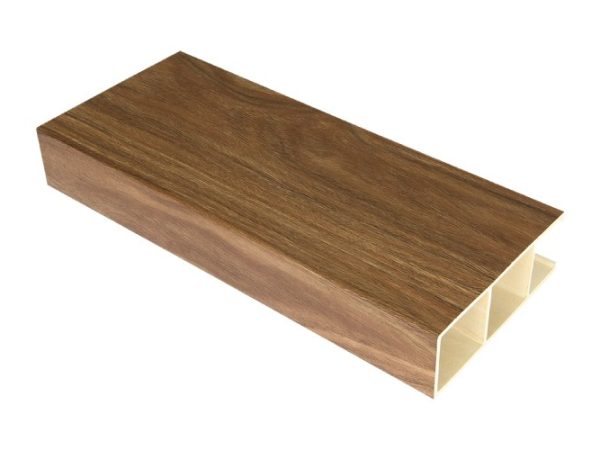
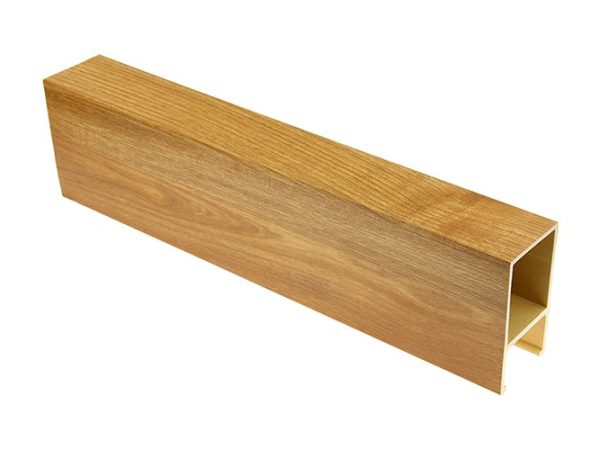
50 × 150 mm section · interior ceiling
50 × 90 mm section · interior ceiling
50 × 75 mm section · interior ceiling
Tell us the size, the quantity and the destination port. We will come back with price, lead time and the packing plan.
The product name and SKU are filled in for you.
Send drawings or specs — we reply in one business day