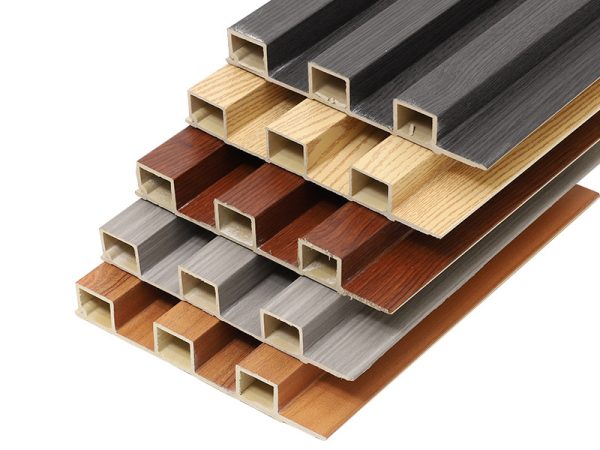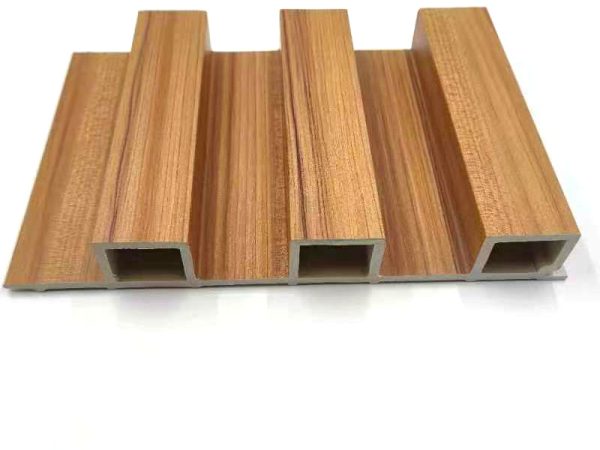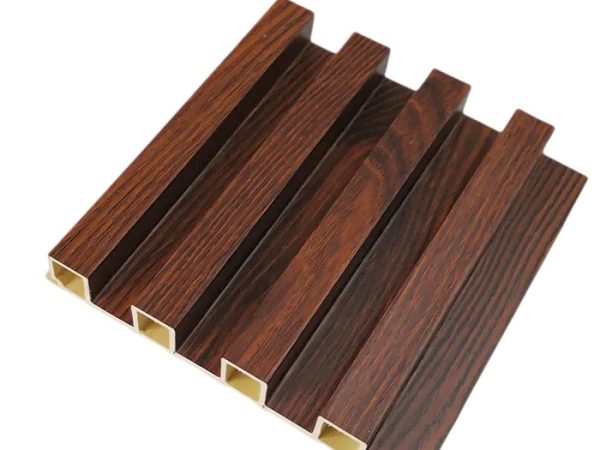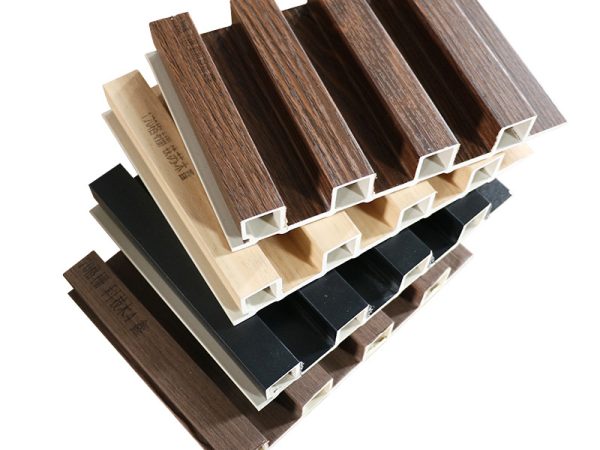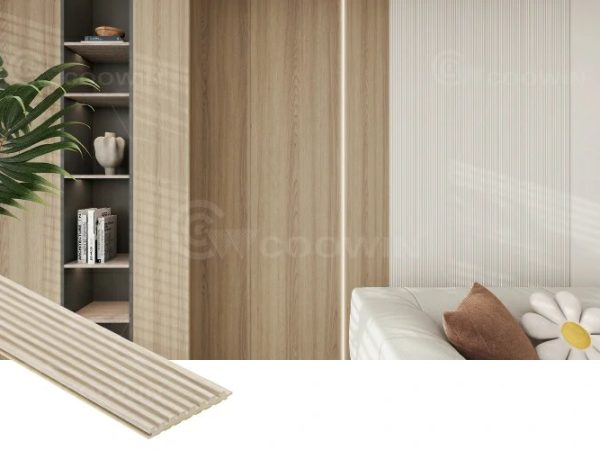
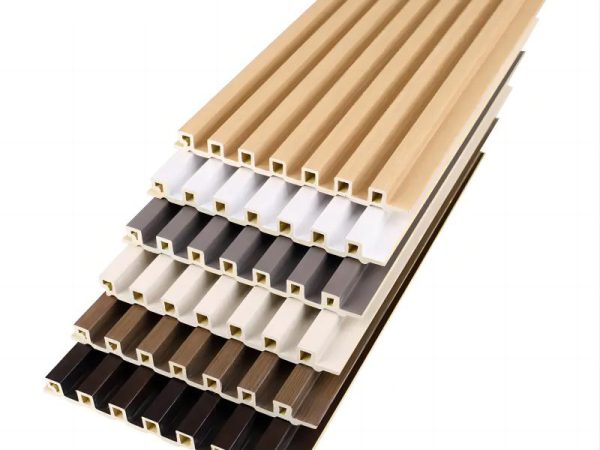
169x24mm
3D Fluted WPC Wall Panel
- Section 169 × 24 mm, supplied made to order to the wall length
- Fluting Three-dimensional relief cut into the face to the full section depth — not a printed line
WPC-15ED72
Get a Quote
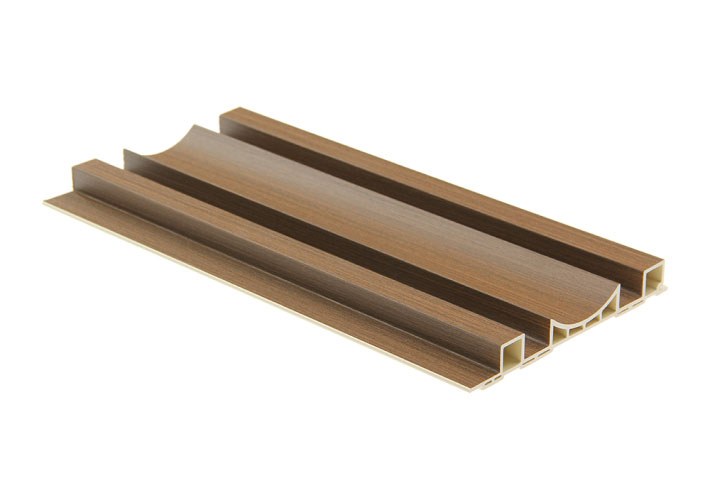
Interior wall
| Fixing | Concealed clip — panels seat by hand, no visible screws and no adhesive |
|---|---|
| Section | Face width to the drawing — the clip-on profile is made to order to the run |
| Access | Panels lift out individually for services behind, then re-seat |
| Substrate | Clip positions are fixed by the profile, so the batten or rail layout has to be accurate |
| Limit | Overhead runs need mechanical retention as well, because the clip relies on seating |
| Standard | SGS tested. CE documentation supplied with EU-bound orders. |
| Maintenance | Wipe clean. No paint or oil finish required. |
Panels seat by hand onto a fixed profile, with no visible screw
A single panel lifts for access and re-seats without disturbing the run
Clip positions are set by the profile, so there is no adjustment at the face
The wall becomes an access panel where valves and sockets sit behind it
A wood-plastic composite wall panel with a concealed clip fixing: each panel seats onto a profile fixed to the batten, and the clip sits behind the joint, so nothing shows on the face. Panels are pushed home by hand rather than screwed through, which is what makes the system removable.
The reason to specify it is access. Where valves, sockets or data points sit behind the finish, or where the wall may have to come down and go back up during the life of the fit-out, a removable panel saves the cost of cutting and patching a fixed wall. A single panel can be lifted out and re-seated without disturbing the run, so the practical advice is to mark the panels that need to come out before the installation is finished, because finding the right one afterwards is the slow part. The trade-off is the substrate: clip positions are set by the profile, so the batten or rail layout has to be accurate in a way a screwed panel does not demand, since there is no adjustment at the face. Overhead runs need mechanical retention as well, because a clip that relies on gravity to stay seated is a risk above head height.
Send the wall layout and the position of anything behind it when you enquire, so the batten setting-out and the removable panels can be agreed together.
Valves and controls behind the panel, reached in minutes instead of through a hatch
Access to isolation valves without demolishing tile
Sockets and cable routes change with the tenant, so the wall opens
Services are added and moved, so the finish has to come off cleanly
1 × 20ft container, mixed across products where the mix suits the project. A sample box can be arranged before the first container.
Yes. Send the product and the size you are specifying, and we will confirm the sample and the lead time for it.
Each panel seats onto a profile that is fixed to the batten, and the clip is hidden behind the joint, so nothing shows on the face. The panel is pushed home by hand rather than screwed through, which is what makes it removable.
Yes, that is the point of the system. A single panel can be lifted for access to a valve or a socket behind, then re-seated. Plan which panels need to be removable and mark them, because finding the right one later is the slow part.
Yes. The clip positions are set by the profile, so the batten or rail layout has to be accurate before the panels go on. Unlike a screwed panel there is no adjustment at the face.
Only with mechanical retention as well, because a clip that relies on gravity to stay seated is a risk overhead. Tell us if the run is overhead and we will confirm the fixing strategy.
Final packing, freight and loading plan are confirmed in writing on the order quotation.
169x24mm
169x24mm
169x24mm
169x24mm
169x24mm
84 × 8 mm section · interior wall
Tell us the size, the quantity and the destination port. We will come back with price, lead time and the packing plan.
The product name and SKU are filled in for you.
Send drawings or specs — we reply in one business day