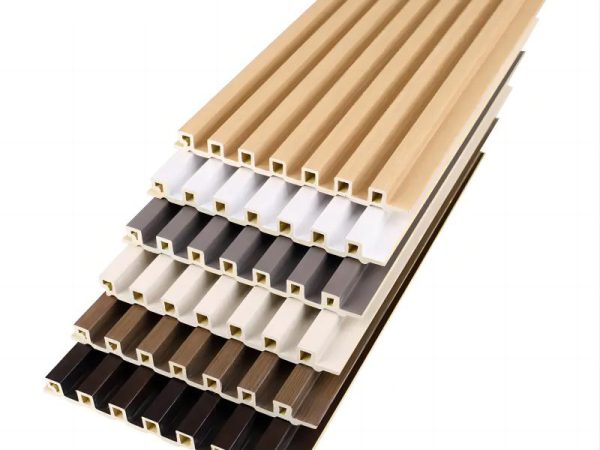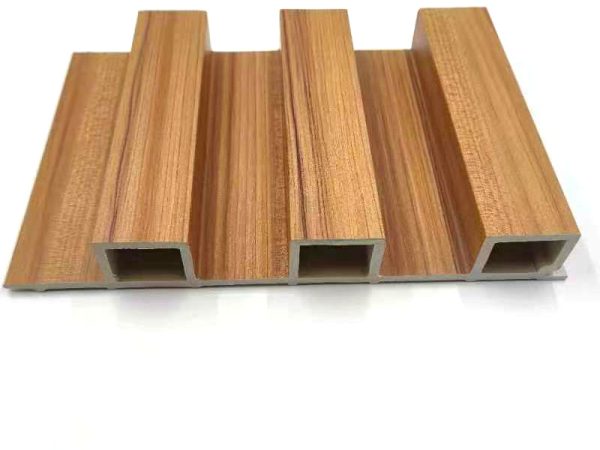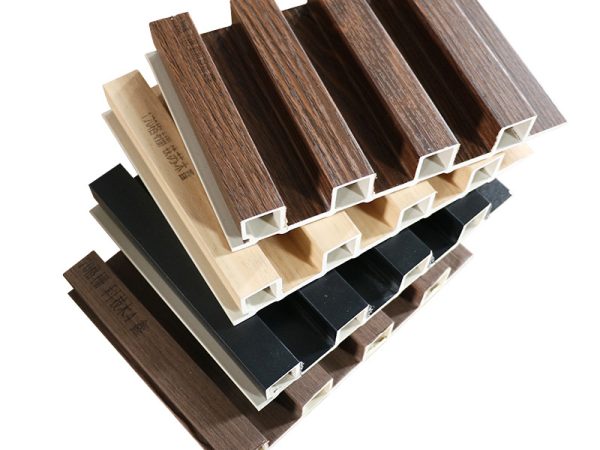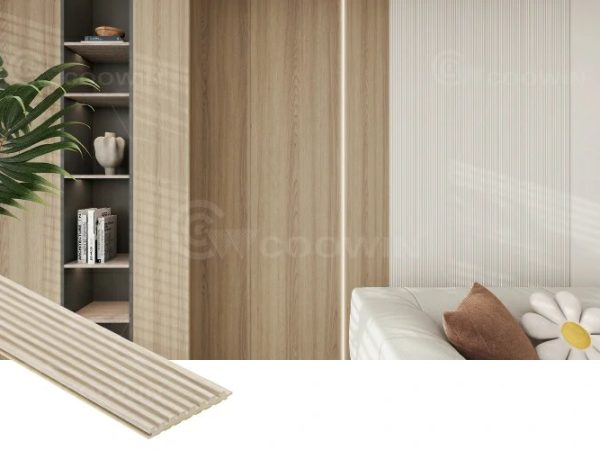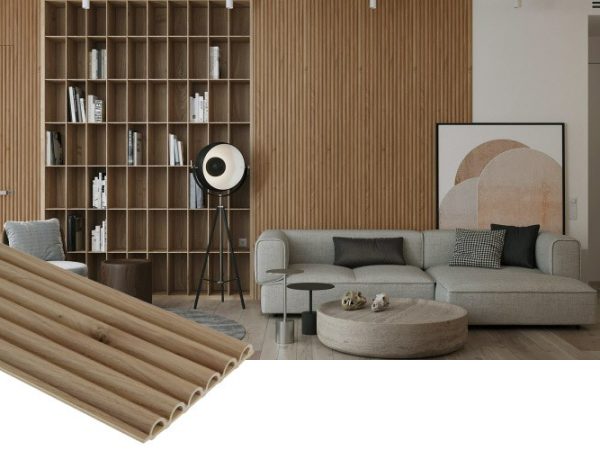
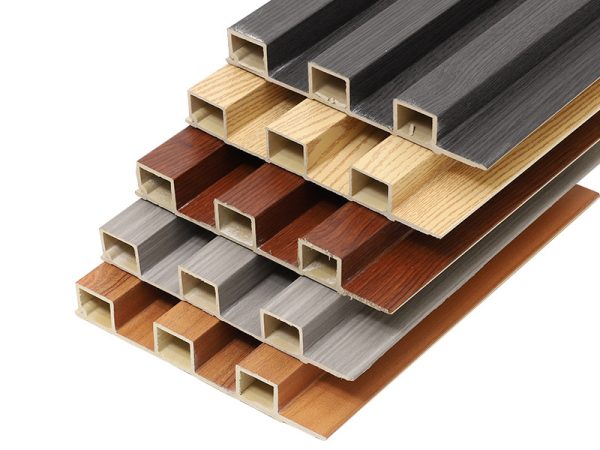
169x24mm
Solid Plain WPC Wall Panel
- Section 169 × 24 mm, flat face, supplied made to order to the wall length
- Face Unbroken — no groove line to hold dust and no pattern to line up
WPC-048221
Get a Quote
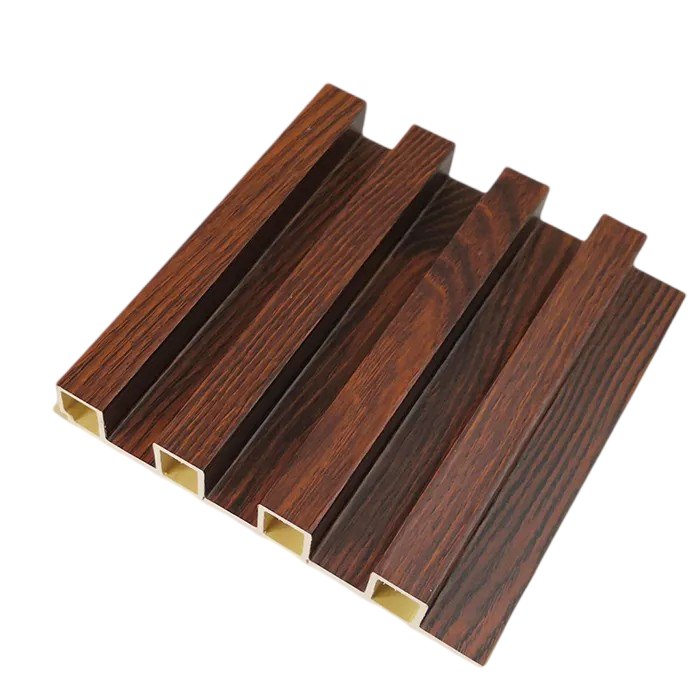
169x24mm
| Section | 169 × 24 mm, grooved, supplied made to order to the wall length |
|---|---|
| Compound | Anti-mould additive carried in the compound, not applied as a surface coating |
| Joint | Ventilated detail — keep the cavity open top and bottom so it can actually breathe |
| Risk | Mould starts behind the panel on a damp substrate, so the battens matter more than the additive |
| Limit | The dry side of a wet room. It is not a tanked surface |
| Standard | SGS tested. CE documentation supplied with EU-bound orders. |
| Maintenance | Wipe clean. No paint or oil finish required. |
The anti-mould agent is in the compound, so cleaning does not wear it off
The joint detail lets the cavity behind the panel breathe, top and bottom
Does not present the damp organic substrate that mould needs to start
The groove carries the shadow line, so the joint becomes part of the detail
A grooved wood-plastic composite panel, 169 × 24 mm, made with an anti-mould additive carried in the compound rather than applied as a coating. It is also produced at 154 × 17 mm and 168 × 22 mm. The additive is the second line of defence; the first is that the panel itself is a closed-cell composite, so it does not present the damp organic substrate that mould needs.
It is specified for humid interior rooms: bathrooms, changing areas, basement rooms and poolside circulation. The grooved face takes the joint into a shadow line, and the joint detail is ventilated so the cavity behind the panel can breathe. That matters more than most buyers expect, because in a bathroom mould usually starts behind the panel on a cold substrate or a damp batten, not on the face. Keeping the cavity open at the top and bottom, and fixing to dry battens, does more for the room than any additive. It is not a tanking product: on the dry side of a shower it performs, inside the wet zone it does not.
Confirm the room’s ventilation strategy when ordering, and make sure the substrate is dry before the first panel goes on, because a panel over a damp wall will fail regardless of the formulation.
The room where mould actually starts, and the cavity behind decides it
Cool, humid rooms where a timber batten wall fails within a season
Wet air sits against the wall all day, so the ventilated joint earns its place
Steam and lint together; a wipe-clean face and a breathing cavity both matter
1 × 20ft container, mixed across products where the mix suits the project. A sample box can be arranged before the first container.
Yes. Send the product and the size you are specifying, and we will confirm the sample and the lead time for it.
It is in the compound, so it does not wear off with cleaning the way a surface treatment does. The panel is also a closed-cell composite, which means it does not provide the damp organic substrate that mould needs in the first place.
Usually behind the panel, on a cold substrate or a damp batten, rather than on the face. That is why the ventilated joint and a dry, stable substrate matter more than the additive — the additive is the second line of defence, not the first.
Not as the tanked surface. Use it on the dry side of the enclosure and tank the wet zone properly. The panel is moisture-resistant, not a waterproof membrane, and a joint that holds water will eventually show it.
No. The joint detail lets the cavity behind the panel breathe, which is what stops condensation sitting against the substrate. Keep the cavity open at the top and bottom so it can actually ventilate.
Final packing, freight and loading plan are confirmed in writing on the order quotation.
169x24mm
169x24mm
169x24mm
169x24mm
84 × 8 mm section · interior wall
158 × 10 mm section · interior wall
Tell us the size, the quantity and the destination port. We will come back with price, lead time and the packing plan.
The product name and SKU are filled in for you.
Send drawings or specs — we reply in one business day