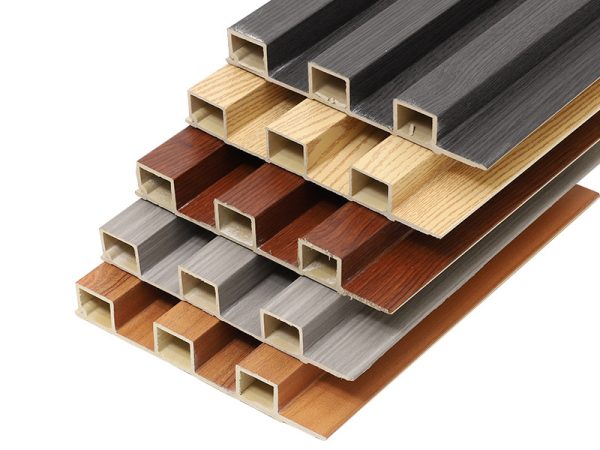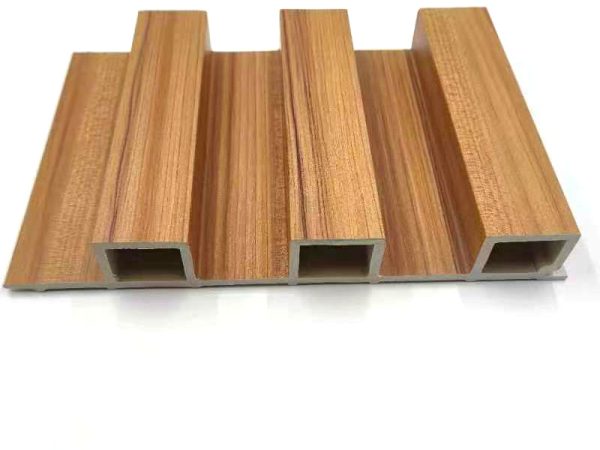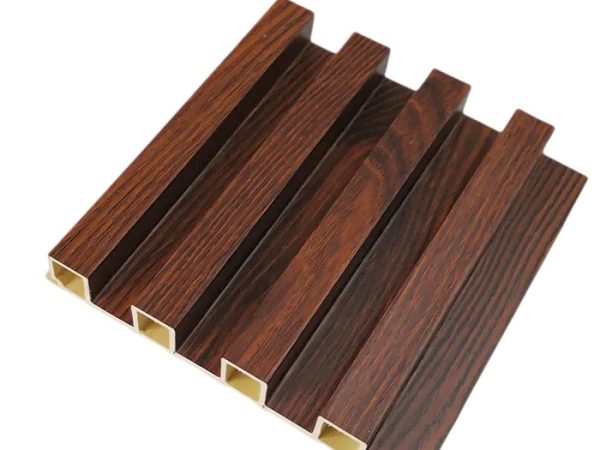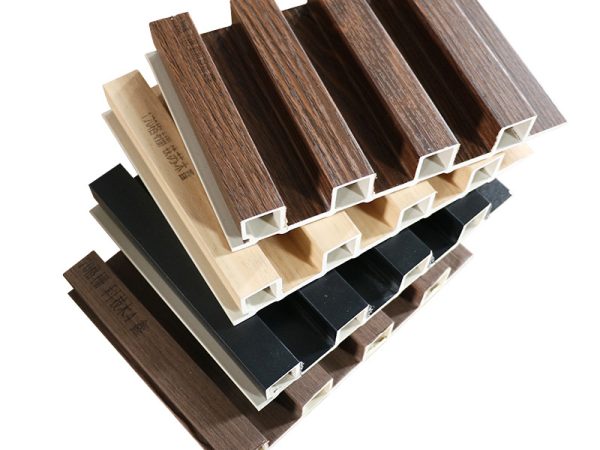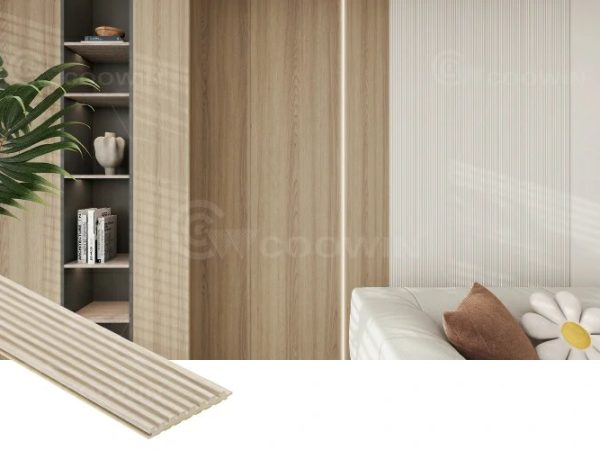
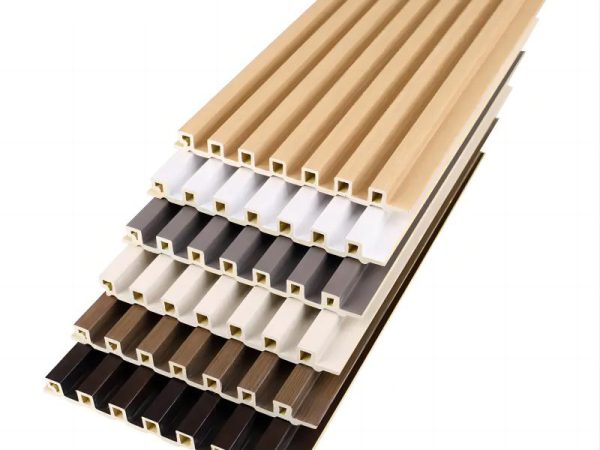
169x24mm
3D Fluted WPC Wall Panel
- Section 169 × 24 mm, supplied made to order to the wall length
- Fluting Three-dimensional relief cut into the face to the full section depth — not a printed line
WPC-15ED72
Get a Quote
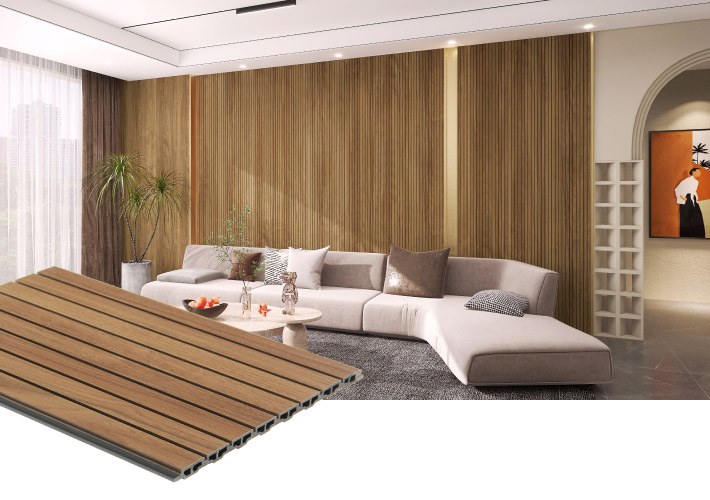
250 × 10 mm section · interior wall
| Face width | 250 × 10 mm wide slat, supplied made to order to the elevation |
|---|---|
| Joint count | Fewer joints per metre than a 169 mm board, so a wall reads as broad slats |
| Proportion | Right for a large elevation, out of scale on a small return — check it in section |
| Fixing | Wider batten centres acceptable than a narrow board, because there are fewer joints to carry |
| Use | Large interior elevations wanting a broad plank rhythm |
| Standard | SGS tested. CE documentation supplied with EU-bound orders. |
| Maintenance | Wipe clean. No paint or oil finish required. |
Fewer joints per metre of wall, so the wall reads as wide boards
A plank scale rather than a fine joint rhythm
Less joint to align, so the run closes faster
10 mm under a 250 mm face, so batten centres have to be watched
A wide-slat wood-plastic composite wall panel, 250 × 10 mm, with a shallow grooved face and an interlocking edge. The wide face is the product: at 250 mm you get markedly fewer joints per metre than a 169 mm board, so a long elevation reads as broad slats rather than a busy rhythm.
It is the section for large interior elevations, where the wall is big enough that a wide plank looks deliberate. On a small return the same board can look out of scale, and it is worth checking the proportion against the room before fixing the order. Because the face is wide and the section is only 10 mm, it flexes more across its width than a 24 mm board; fixed direct to a flat wall that is not a problem, but on battens the centres have to be close enough that the face does not drum between them. Panels fix to battens with the joint closing into a shadow line, and installation is faster than a narrow board because there is less joint to set out. External corners need a trim or mitred return, since the interlocking edge is designed for flat runs.
Confirm the elevation width and the corner details when ordering, because a wide slat amplifies any error in the set-out at the ends.
A broad face holds its scale where a narrow board would look busy
The wide plank gives a wall presence without a pattern
Industrial volumes where the board scale has to match the room
A single broad rhythm across a wall that will be photographed
1 × 20ft container, mixed across products where the mix suits the project. A sample box can be arranged before the first container.
Yes. Send the product and the size you are specifying, and we will confirm the sample and the lead time for it.
On a large elevation. A wide board gives fewer joints per metre, so a long wall reads as broad slats instead of a busy rhythm, and the installation is quicker because there is less joint to set. On a small return the same board can look out of scale.
It is a shallow section for a wide face, so it flexes more across the width than a 24 mm board does. That is fine fixed direct to a flat wall; on battens, keep centres close enough that the face does not drum between them.
An external corner needs a trim or a mitred return, because the interlocking edge is designed for a flat run. Plan the corner detail before setting out.
With mechanical fixing at every joint, yes, but the wide face makes any droop more obvious than on a narrow board. Confirm the fixing pattern with us before ordering for an overhead run.
Final packing, freight and loading plan are confirmed in writing on the order quotation.
169x24mm
169x24mm
169x24mm
169x24mm
169x24mm
84 × 8 mm section · interior wall
Tell us the size, the quantity and the destination port. We will come back with price, lead time and the packing plan.
The product name and SKU are filled in for you.
Send drawings or specs — we reply in one business day