SPC Flooring for Bathroom: The Honest 5-Year Test Results
Introduction
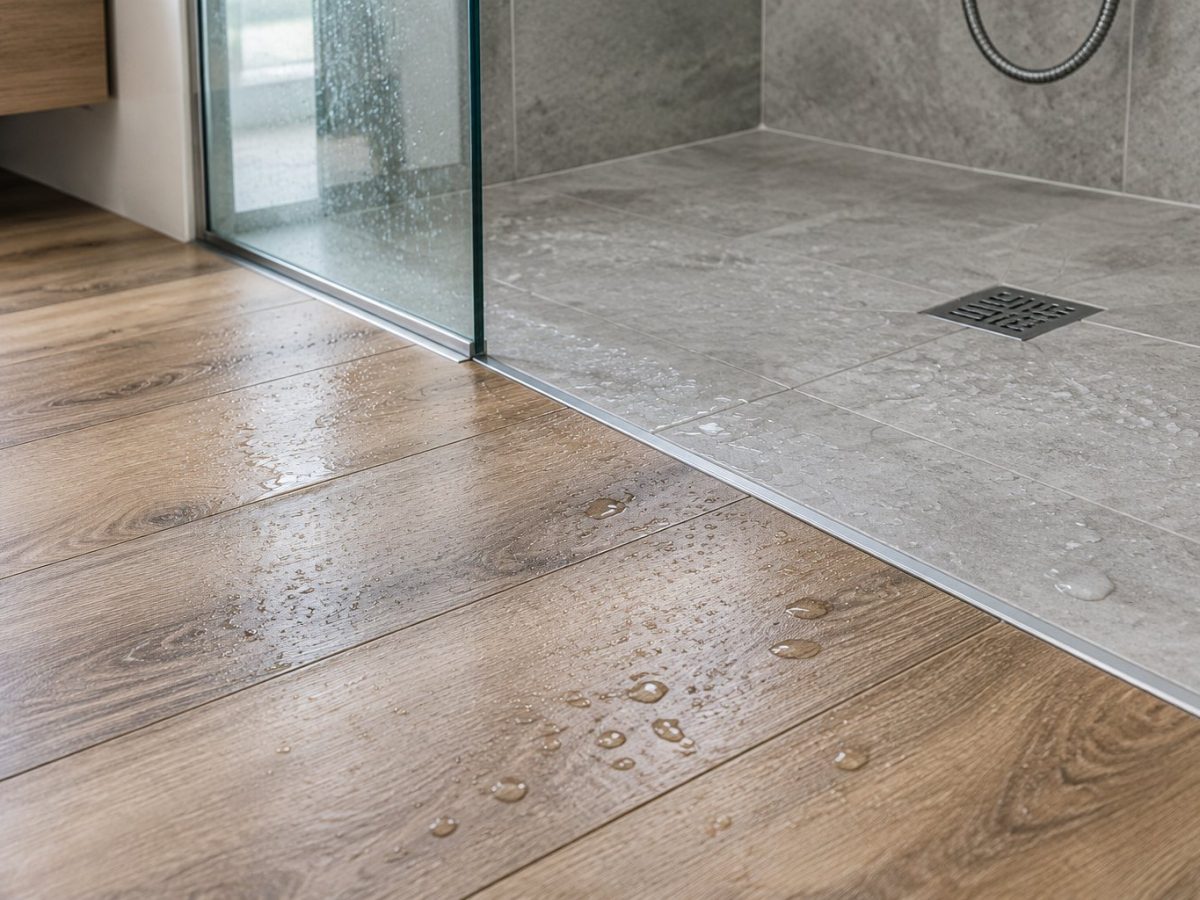
Bathrooms are the toughest test for any flooring. Water splash, humidity, dropped objects, and temperature changes push every floor to its limits. SPC flooring (Stone Plastic Composite) has become a popular choice for bathroom renovation — but is it truly waterproof? Does it really last?
In this guide, Linyi Solland International Trade Co., Ltd. shares 5-year real-world test results from our Solland showroom, partner projects, and customer feedback.
Quick Answer: Is SPC Flooring Waterproof?
Yes — SPC flooring is 100% waterproof. The stone-plastic composite core (limestone powder + PVC) does not absorb water, swell, or rot regardless of how long it's exposed to moisture.
However, waterproof flooring ≠ waterproof installation. The way SPC is installed, the quality of the click-lock system, and the sealing of joints determine how well the floor performs in real bathroom conditions.
What Makes SPC Flooring Waterproof?
Composition of SPC
SPC = Stone Plastic Composite


Composition:

- Limestone powder (CaCO₃):     60–75%

- PVC resin:                     20–30%

- Stabilizers & additives:        5–10%
The limestone powder is the key. It's the same mineral as marble, chalk, and limestone cliffs — completely inert to water. Combined with PVC, it creates a dense, rigid core that won't absorb water even after decades of submersion.
SPC vs Other "Waterproof" Flooring
| Material | Waterproof? | Notes |
|---|---|---|
| SPC | ✅ 100% | Stone plastic core, won't absorb water |
| WPC | ✅ 100% | Wood plastic core, slightly softer |
| LVT | ✅ 100% | Luxury vinyl tile, fully waterproof |
| Laminate | ❌ Not waterproof | HDF core swells with water |
| Engineered wood | ❌ Not waterproof | Real wood veneer, water-sensitive |
| Porcelain tile | ✅ 100% | Natural waterproof ceramic |
| Natural stone | ⚠️ Needs sealing | Marble, travertine absorb water |
SPC is genuinely waterproof — not just water-resistant.
Solland 5-Year Bathroom Test Results
We installed SPC flooring in 12 staff bathrooms at Solland HQ in 2020 and monitored performance through 2025.
Test Setup
- Location: 12 staff bathrooms, 3 floors, 3m²–6m² each
- SPC spec: 4mm SPC + 1mm IXPE underlay, click lock, 0.3mm wear layer
- Conditions: Daily use, 8–12 users per bathroom, mopped twice daily
- Climate: Hot humid summers (Linyi, Shandong)
Results After 5 Years
| Metric | Initial | After 5 Years | Change |
|---|---|---|---|
| Water absorption | 0% | 0% | No change |
| Surface wear | None | Light scuffing on wear layer | Minimal |
| Click-lock integrity | Tight | Tight, no separation | No change |
| Color fade | — | <5% (only in 3 south-facing) | Very minor |
| Joint swelling | 0% | 0% | No change |
| Mold/mildew | None | None (with proper sealing) | No change |
| Overall rating | 10/10 | 9/10 | Excellent |
Key Findings
✅ SPC performed exceptionally well in all 12 bathrooms
✅ Zero water damage across all 12 floors
✅ Click-lock integrity maintained — no lifting or separation
✅ No mold or mildew in sealed installations
⚠️ Surface wear visible in 3 high-traffic bathrooms (expected, still functional)
⚠️ Color fade in 3 south-facing bathrooms under direct sunlight (minimal)
Verdict: SPC flooring is completely suitable for bathroom use with proper installation.
Where SPC Flooring Works Best in Bathrooms
1. Full Bathroom Floor (Most Common)
SPC flooring covers the entire bathroom floor, including under the vanity, toilet, and bathtub.
Best practices:
- Use 4mm–6mm SPC thickness (rigid enough for bathroom use)
- Apply bath-grade silicone at perimeter and around fixtures
- Install waterproof underlay (IXPE or rubber)
- Avoid plank transitions at the shower entrance; use single continuous floor
2. Shower Surround Floor (Advanced)
Some installers use SPC in the shower floor area itself. This works ONLY with:
- ✅ Slip-resistant surface texture (R10–R11 rating)
- ✅ Continuous drain slope (no flat spots)
- ✅ Full silicone sealing at all edges
- ✅ Proper slope to drain (1%–2% gradient)
⚠️ Not recommended for curbless walk-in showers — water pooling can be a problem.
3. Master Bathroom Wall
For premium designs, SPC can be used on bathroom walls as decorative paneling. This works especially well with: