Introduction
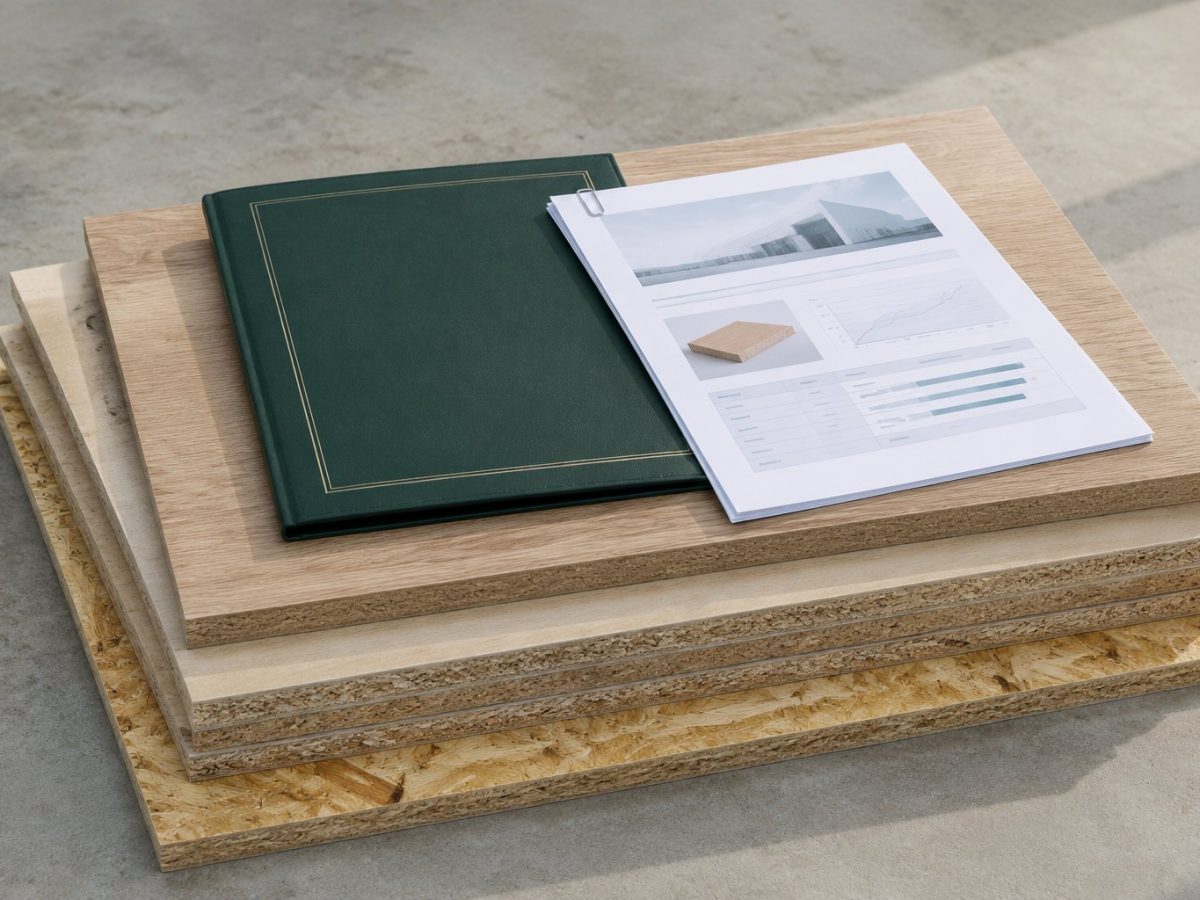
If you import plywood, MDF, particle board, OSB, or any composite wood product into the United States or California, you must comply with CARB Phase 2 (California Air Resources Board) and EPA TSCA Title VI standards. Non-compliance can result in fines, product seizure, and import bans.
This guide from Linyi Solland International Trade Co., Ltd. explains what CARB Phase 2 is, why it matters, and how Solland ensures every shipment meets the standard.
What Is CARB Phase 2?
CARB Phase 2 is the second phase of the California Air Resources Board's Airborne Toxic Control Measure (ATCM) for composite wood products. It regulates formaldehyde emissions from hardwood plywood, particle board, and MDF (medium density fiberboard).
Key Facts
- Enacted: 2008 (Phase 1), 2011 (Phase 2 effective)
- Authority: California Air Resources Board (CARB)
- Scope: All composite wood products sold in California
- Federal equivalent: EPA TSCA Title VI (2017, aligned with CARB Phase 2)
- Standard: Maximum formaldehyde emission levels by product type
Why Formaldehyde?
Formaldehyde is a probable human carcinogen (IARC Group 1). Composite wood products use formaldehyde-based adhesives (UF, MUF, PF) that can off-gas formaldehyde over time. CARB Phase 2 limits these emissions to protect indoor air quality.
CARB Phase 2 Emission Limits
| Product Type | Maximum Emission (ppm) | Test Method |
|---|---|---|
| Hardwood Plywood (HWPW) | 0.05 ppm | ASTM E1333 or CA Method 100 |
| Particle Board (PB) | 0.09 ppm | ASTM E1333 or CA Method 100 |
| Medium Density Fiberboard (MDF) | 0.11 ppm | ASTM E1333 or CA Method 100 |
| Thin MDF (< 8mm) | 0.13 ppm | ASTM E1333 or CA Method 100 |
| Laminated Products | Same as core | Core-based testing |
The lower the ppm, the stricter the standard. Hardwood plywood has the strictest limit because it commonly uses urea-formaldehyde (UF) adhesives.
CARB Phase 2 vs EPA TSCA Title VI
In 2017, the EPA adopted TSCA Title VI, which is substantially equivalent to CARB Phase 2. The two regulations are mutually recognized:
| Standard | Authority | Coverage |
|---|---|---|
| CARB Phase 2 | California | California state law |
| EPA TSCA Title VI | US Federal | All 50 states |
| Mutual Recognition | Both | Test reports accepted both ways |
Key point: If you meet CARB Phase 2, you automatically meet EPA TSCA Title VI. Compliance is standardized across the US.
Who Must Comply?
CARB Phase 2 applies to:
✅ Manufacturers of composite wood products

✅ Importers of composite wood products

✅ Distributors selling in California and US

✅ Fabricators (e.g., cabinet makers using laminated panels)

✅ Retailers selling finished products

✅ Anyone in the supply chain
If you import composite wood from China to the US, you are responsible for compliance.
Three-Layer Compliance System
CARB Phase 2 requires compliance at three layers:
Layer 1 — Panel Manufacturer (Mill Level)
The Chinese factory must:
- ✅ Use CARB Phase 2 compliant adhesive (low-formaldehyde or no-added-formaldehyde)
- ✅ Operate an approved quality control program
- ✅ Be certified by a CARB-approved Third-Party Certifier (TPC)
- ✅ Test every product line quarterly
- ✅ Maintain 5 years of test records
Layer 2 — Fabricator (Laminator/Veneer Layer)
If you laminate or veneer composite wood in the US, you must:
- ✅ Use CARB compliant core panels
- ✅ Limit edge banding to compliant adhesives
- ✅ Add upstream credits if your laminating process adds formaldehyde
- ✅ Test (or use tested cores) quarterly
Layer 3 — Finished Good Manufacturer
If you make furniture, cabinets, or finished products:
- ✅ Use CARB Phase 2 compliant components
- ✅ Maintain bill of materials showing compliant sources
- ✅ Provide compliance documentation on request
How to Verify Compliance
Step 1 — Request TPC Certification
Every Chinese panel manufacturer must be certified by a CARB-approved Third-Party Certifier (TPC). The four approved TPCs are:
- Benchmark International (USA)
- SGS (Switzerland, global)
- TÜV (Germany, global)
- Intertek (USA, global)
Each TPC maintains a public list of certified mills. Before placing an order, verify your supplier is on the list.
Step 2 — Request Quarterly Test Reports
CARB Phase 2 requires mills to test every product line quarterly. You should request:
- ✅ Test report with emission value (ppm)
- ✅ Test method used (ASTM E1333 or CA Method 100)
- ✅ Test date within the last 90 days
- ✅ Lab accreditation (TPC approved)
- ✅ Product line identification
Step 3 — Verify Chain of Custody
If you buy components (e.g., laminated panels), ensure the core panel is CARB compliant and the laminator also maintains compliance.
Step 4 — Customs Documentation
For US import, ensure:
- ✅ US Customs entry includes CARB Phase 2 declaration
- ✅ Bill of lading references CARB compliant products
- ✅ Packing list includes CARB compliance statement
- ✅ Mill certification document is available
How Solland Ensures CARB Phase 2 Compliance
1. Certified Manufacturing
- ✅ Solland is certified by SGS (Third-Party Certifier)
- ✅ Mill ID: SGS-CARB-XXXX (verified on SGS online database)
- ✅ All 6 production lines certified for HWPW, MDF, PB, OSB
- ✅ Annual recertification audit
2. Low-Formaldehyde Adhesives
Solland uses:
| Product | Adhesive Type | Typical Emission |
|---|---|---|
| Plywood | Phenolic (PF) or low-formaldehyde MUF | 0.02–0.04 ppm |
| MDF | Low-formaldehyde MUF or NAF | 0.05–0.09 ppm |
| Particle Board | Low-formaldehyde MUF | 0.05–0.08 ppm |
| OSB | MDI (no formaldehyde) | < 0.01 ppm |
3. Quarterly Testing
- ✅ Every product line tested quarterly by SGS
- ✅ Additional in-house testing monthly
- ✅ Test results available on request to customers
- ✅ Historical data retained for 5+ years
4. Quality Control Program
Solland's CARB Phase 2 QCP includes:
- ✅ Raw material inspection — incoming adhesive verification
- ✅ In-process testing — small-scale chamber tests
- ✅ Final product testing — quarterly SGS audits
- ✅ Process control — temperature, pressure, humidity monitoring
- ✅ Recall procedure — non-compliant product recall protocol
5. Documentation Provided
For every shipment, Solland provides:
- ✅ Mill certification (CARB + EPA TSCA Title VI)
- ✅ Quarterly test report (within last 90 days)
- ✅ SGS TPC certificate
- ✅ Material Safety Data Sheet (MSDS)
- ✅ CARB compliance declaration for customs
- ✅ Chain of custody documentation
Costs of CARB Phase 2 Compliance
What Makes Composite Wood CARB Phase 2 Compliant?
| Component | Cost Impact |
|---|---|
| Low-formaldehyde adhesive | +5%–15% material cost |
| NAF/MDI adhesive | +20%–40% material cost |
| Quarterly TPC testing | $500–$2,000 per test |
| Annual certification | $3,000–$10,000 per year |
| In-house QC equipment | $20,000–$100,000 initial |
| Documentation system | $5,000–$20,000 annual |
Typical price premium for CARB Phase 2 compliant panels: 8%–15% over standard E1 panels.
Is the Premium Worth It?
Absolutely. The cost of non-compliance is much higher:
- ❌ Fines: $1,000–$10,000 per day per violation
- ❌ Product seizure: Loss of entire shipment
- ❌ Import ban: Mill may be blacklisted
- ❌ Customer lawsuits: If off-gas causes health issues
- ❌ Reputation damage: Loss of US market access
Common Buyer Mistakes
❌ Buying "E0" from uncertified mill — "E0" is a marketing term, not CARB compliant
❌ Trusting old test reports — must be within last 90 days
❌ Not verifying TPC certification — fake certificates are common
❌ Assuming all "European E1" is CARB compliant — E1 ≠ CARB Phase 2
❌ Skipping quarterly test request — at your own risk
❌ Buying laminated panels without checking core — laminate hides core
CARB Phase 2 vs Other Standards
| Standard | Body | Emission Limit | Region |
|---|---|---|---|
| CARB Phase 2 | CARB | 0.05–0.13 ppm (product dependent) | California, USA |
| EPA TSCA Title VI | EPA | Same as CARB Phase 2 | All 50 US states |
| E1 (Europe) | EU | ≤ 0.124 mg/m³ (≈ 0.1 ppm) | EU |
| E0 (Global) | Industry | ≤ 0.5 mg/L (perforator) | Global |
| JIS A 5905 (Japan) | JIS | ≤ 0.5 mg/L (F★★★★) | Japan |
| GB 18580 (China) | China | ≤ 0.124 mg/m³ (E1) | China |
CARB Phase 2 is the strictest standard globally for hardwood plywood.
Recent Regulatory Updates (2025–2026)
2025 Updates
- EPA TSCA Title VI compliance enforcement increased — random market testing
- Customs verification — CARB Phase 2 documents now required at every entry
- No-De minimis exemption — even small parcels must comply
2026 Updates
- Stricter enforcement on laminated products — new laminated product rule
- CARB Phase 3 under consideration — even lower emission limits proposed
- NAF (No Added Formaldehyde) incentives — California giving tax breaks for NAF products
How to Source CARB Phase 2 Compliant Panels from Solland
Step 1 — Provide Your Requirement
Tell us:
- Product type (HWPW, MDF, PB, OSB)
- Thickness and size
- Quantity
- Target delivery date
Step 2 — Receive Quote with Compliance Documentation
Within 24 hours, Solland provides:
- ✅ Product specification
- ✅ Price per sheet
- ✅ Available TPC certification
- ✅ Sample test report (within last 30 days)
- ✅ Production timeline
Step 3 — Sample Approval
Receive 200mm × 200mm samples within 5–7 days. Test:
- Visual appearance
- Dimensions
- If you have testing capability, emission test
Step 4 — Production with QC
- ✅ Production per Solland CARB QCP
- ✅ TPC audit during production
- ✅ Test reports generated
- ✅ Photos and videos of production
Step 5 — Pre-Shipment QC
- ✅ Final test report issued
- ✅ Stamp/seal applied to compliant products
- ✅ Documentation package prepared
- ✅ Customs paperwork prepared
Step 6 — Shipment to US
- ✅ FOB, CIF, or DDP available
- ✅ All documents emailed same day as shipment
- ✅ Tracking information provided
- ✅ Post-shipment support for customs clearance
Conclusion
CARB Phase 2 compliance is non-negotiable for any importer selling composite wood products in the US market. The cost of compliance is far less than the cost of non-compliance (fines, seizures, market loss).
Linyi Solland has been CARB Phase 2 certified since 2014 and ships compliant products to 40+ US customers every month. We provide all necessary documentation and stand behind every shipment.